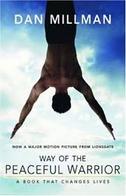
 I just finished reading Way of the Peaceful Warrior by Dan Millman. I had it on my reading list for a while, and several people recommended it to me. The book definitely was inspirational, and I liked many of its Zen-like lessons, such as about paying attention to life, being happy for no reason, and appreciating each moment you have. It also demonstrated the hard work it takes to make real change in life and the value of good teachers. The book reminded me a lot of Zen and the Art of Motorcycle Maintenance; the fact that the teacher was a gas station attendant and car mechanic must have been an implicit nod to the Motorcycle inspirations. What I didn't like were the several totally magical/fantastical/shamanistic elements; if these were brought down to earth and reality and explained as simple visualizations rather than as special powers of the teacher, I think it would have made the book lose less of its seriousness and value. Overall though, I did enjoy it and got many good ideas, inspirations, and butt kicks out of it, so it was all good.
0 Comments
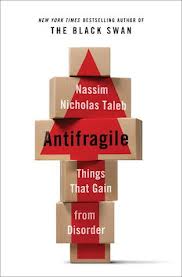 For the last 2 months, my mind has been blown on a daily basis by the book Antifragile: Things That Gain From Disorder by Nassim Nicholas Taleb. This is the longest and deepest I've gotten into a book since high school, and I found pretty much every chapter thought-provoking and lifestyle-questioning. I already felt like my mind had been blown, and that was just after finishing the prologue. "Antifragile" is the word that Taleb coins for the concept of gaining from disorder (the real opposite of fragility, which is not the same thing as "robust"). The book covers the topics of philosophy, finance, math, statistics, lifestyle, food, fitness, education, and history, and it applies various strategies and concepts to finding ways to live more naturally and with more antifragility. I can see how many people will be angered and offended by the direct manner in which Taleb denounces the professions of consultant, banker, economist, academic, business school professor, soccer mom, and tourist. I think books that question a lot of fundamentals are the only ones that bring actual progress to our lives as human thinkers, and this book does exactly that. Overall, I took 47 pages of notes on the book (see below), and that sheer quantity is enough to show how much I liked it. It's not easy to distill these into a few bullet points, and I will be trying over the next couple months to come up with some concrete suggestions and techniques to put the book's ideas into practice in my own life. Here are just a handful of lessons and broad concepts that come immediately to mind:
Below are the rest of my notes. I really want to discuss some of this stuff with other readers, so let me know what you think. 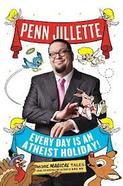 I'm a big fan of the magicians Penn & Teller and really enjoyed Penn's previous book about religion, life, and magic. When I heard he had a sequel filled with more juicy stories and philosophy called Everyday is an Atheist Holiday , it went right to the top of my reading list.
I found this installment just as funny and thought-provoking as the first, and I was grateful for the chance to hear more about Penn's family and how he manages the craziness of his own personal life with respect to his devotion to his children, their upbringing, and their morality. I applaud his openness and willing to share, teach, and make fun of himself. Below are some of the synopses and tidbits that were memorable for me amongst the many stories he told. Hates "exception proves the rule" Joy the world song: not joy in the world No joy in holiday songs Not much joy in new testament, just in afterlife Where is joy in this life Atheists have joy every day of the year Sometimes a sheet is not just a ghost James randy modern Houdini Learn how to lie to reveal the truth fetish balls for Halloween Made his own ghost costume, looked like kkk Loves kids dearly Canadian thanksgiving Equal opportunity offensiveness Making fun of racists profanity usage Name in vein Celebrity apprentice Hawthorne effect Dancing with the stars Doesn't care about trump Nov 9, 1909: everything in the world is enough Can be polite and honest at same time Just cuz want to believe something doesn't mean should Religious view is more scary than atheist Pierce Morgan radio show 1909 when his mom born Life is time Desire for something impossible doesn't make it possible Death is nothing, not afraid of nothing But afraid of time passing and not enjoying kids like now Everything in world is enough Defy jails of world to hold son What Houdini said Being happy with his own success so doesn't need son to do anything for him Kevin/hugh jackman/Houdini movie Thanksgiving No religious overtones, just enjoying life Magician stands lazily naked on stage Purpose of art is to do that Poet does this too He and teller only ones to do full frontal naked in show Telephone conversation with gottfried New years days: gyms, whorehouses, mornings with prostitutes Gives gifts to kids and presents Art is life Drones are death Sports: everyone has a plan until u get hit Magic trick during his brain surgery Loves baths Best to say when his mom died on new years day: I'm sorry for your loss He doesnt drink or make resolutions or work on new years or watch sports Celebrates new years day by remembering mom Mlk day separation of church and state I have a dream speech has no religious references in it Bible sets a low bar for compassion King Chooses to include instead of exclude Magic word Christian created by politicians to get elected Thinks Obama really atheist Thinks Mlk a hero Groundhog day No such thing as magical thinking Don't have to worry about what to wish or hope for, just what to work for Magic is intellectual art form Teller was teacher and very determined Penn was juggler, clown training No one in show biz works as hard in life as someone with a real job in one day Did roadshows with teller when started Show is same every night Groundhog day: try to do perfect each time The art is groundhog day Sick days Blackmail against him Worked with lawyers and FBI Didn't want to care but did care If ever blackmailed go straight to FBI Just have to take sick days sometimes Go with sickness, go through it April fools day penn and teller get killed movie They don't do practical jokes Teaches scientist to tell dirty joke at Ted conference Happy birthday Central planning doesn't work He's libertarian Disney wouldn't allow plaque that said no god or dog gone backwards Chiquita banana Wednesday Ash Wednesday Puts Chiquita banana sticker on forehead to show love of life Have a nice Easter Book of Mormon best play, says written by atheist Deepest insult is just truth/identity of target Easter is hollow chocolate rabbit Gospel Christian magic Hitch and tommy Song poems by everyday people pure expressions of passion Legacy after life less important, eventually all forgotten, but during life feels like will remember forever Focus on this life Fathers day cards Will never be able to send and receive fathers day cards at same time He got married late, one kid ivf, other natural Graduation day Got himself voted for every category of yearbook by convincing class Arte The who Passion and art Ron Jeremy Celebrity apprentice Blue man group What art can mean Fourth of July Joseph Campbell, plot abstraction, hero "things happen" Transformation Production Object in impossible location Restoration Animation Trips to India, china, Egypt Cultural differences America only country founded on ideas, not cultural heritage Worries we're losing sight of the ideas and becoming just a sports team My son's morality does not come from gd Gay marriage Right and wrong are separate from authority Son chooses moral actions from inside and from young age Morality above religion Thanks Crying with happiness |
Archives
June 2024
Categories
All
Subscribe |
 RSS Feed
