Max Mednik
  • Home
  • About
  • Interests
    • Angel investing
    • Magic
    • Scuba Diving
  • Blog
  • Contact

Readings and musings

Lessons from Stanford d.school Design Thinking Bootcamp Day 1

7/24/2012

1 Comment

 
Picture
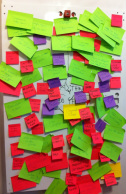
Our team's empathy map at the end of Day 1.
Earlier this month, I was lucky to attend an awesome Design Thinking Bootcamp at the Stanford d.school in coordination with the Stanford Graduate School of Business. There were about 100 students from all sorts of companies, including many who flew quite far (Japan, Australia, Denmark, Oman, among others I met) to attend. I chose to do the program because the d.school opened around the time I graduated from Stanford, and I had always wanted to take some classes there in order to learn new problem-solving and creativity skills. This program was an awesome introduction to design thinking, which is a much different way of thinking about creativity, problem-solving, and innovation than traditionally taught. Some media, like the Wall Street Journal, have noticed this recently.

The focus of "d.thinking" is about learning from the world and people around you (instead of inside your head), primary observation and interviewing, and very rapid prototyping and iterating. The course itself followed these principles, focusing on learning by doing and minimizing lectures (with lectures ALSO focusing on showing rather than telling).

At the d.school, there were about 20 coaches who worked closely with five-person student teams on an intensive project (redesigning the airport ground experience for jetBlue!). Getting a "backstage pass" through TSA and interviewing real people at SFO was an awesome way to learn "empathy," the first stage of the design process. And each team took the project in a different direction, culminating with full prototype testing and storytelling demonstrations to jetBlue VPs on day 3.

The entire experience was fun and engaging, and the staff was awesome. I learned a lot and got the chance to meet and get to know some really smart and friendly people from around the world.

What's really amazing is that the d.school offers all their materials and methods online for free (Creative Commons licenses). Sort of like the Coursera effort that Stanford spearheaded, it's clear the university cares about spreading knowledge and improving the state of "design thinking" for everyone.

Below are my notes on Day 1 (blog posts about following days forthcoming). I plan to do my part to spread design thinking by promoting the methods and running an event or two to expose people to the methodology around Southern California. Let me know if you're interested in learning with me!

Intro to Design Thinking (Gift Giving exercise)
a.      Step 1: interview
b.      Step 2: dig deeper
i.      Just ask why
ii.      Tell me more
iii.      If you can get your partner to cry, it’s good (therapists on staff)
iv.      Great design fueled by emotion
v.      Not incremental design; new territory
vi.      Go into tough territory w/ questions

c.       Reframe the problem

d.      Step 3: capture findings
i.      Needs/goals and wishes
1.       Use verbs (not solutions)
2.       Insights
a.       Trust instincts

e.      Step 4: take a stand w/ a POV
i.      REFRAME
ii.      Not just gift giving
iii.      Get off reservation
iv.      New subjects

f.        Ideate: generate alternatives to test

g.       Step 5: sketch at least 5 radical ways to meet your user’s needs
i.      No words, #s
ii.      Crappy sketches
iii.      Quantity over quality
iv.      Record of 17 sketches in 5 min in some class

h.      Step 6: share your solutions & capture feedback
i.      Another learning/empathy step
i.         Iterate based on feedback
j.        Step 7: reflect & generate a new solution

k.       Build and test

l.         Step 8: build your solution
i.      Not just small version
ii.      All about physical experience
iii.      Let your prototype go
1.       Let go of it physically
2.       Let go of it emotionally
3.       Let it be destroyed, misused by partner
4.       It’s just a tool to enable more learning of partner

m.    Step 9: share your solution and get feedback
i.      What worked
ii.      What could be improved
iii.      Questions
iv.      Ideas

n.      What feels like to be so lo-fi?

o.      Debrief
i.      Brag on your user
ii.      Brag on your designer

p.      Emotional catharsis: throwing away your prototype

Empathy in Field
c.       Best to draw sketches of what you see around you, not just notes

d.      Debrief lecture
i.      Empathy map
1.       Say
2.       Think
3.       Do
4.       Feel
ii.      Unpacking onto empathy map: put post-its from stories you observed

1.       As put up post-it, say it out loud
iii.      Observe: broad
iv.      Define: narrow, reframe as no one has done before
v.      Talk to people THEN define the problem
vi.      Go after the harder challenge when offered

e.      POV: user, needs, insight
i.      Insight: what did you notice that no one noticed
ii.      Choose the hard route
iii.      When choosing a milkshake flavor, just choose some milkshake flavor then will know if it feels right

Takeaways from Day 1

i.      Lean into it
ii.      Don’t jump to conclusion, reframe problem
iii.      Stories, details, don’t generalize
iv.      Beginner’s/child’s mind
v.      Freedom to not have agenda
vi.      Ask why and repeat
vii.      Moveable furniture rocks
1 Comment
Notes on Web 3.0 Talk with Vint Cerf

7/22/2012

0 Comments

 
Picture
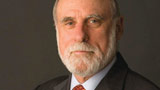
I attended a fun talk at UCLA recently by Vint Cert, who is Google's Chief Internet Evangelist, and considered by many as one of the fathers of the Internet. Through humor, interesting stories, and wise perspective, he shared his thoughts on the history and the future of the Internet. You can watch the full video at the CNSI website.

Cerf actually studied at both Stanford and UCLA and was a co-designer of TCP/IP, a foundational protocol for the Internet. Of his many honors, he received the Alan Turing award for his influential work.

Below are my notes on the talk.

  • Al Gore wrote the bill that funded the backbone and created an organization to connect all government funds for networking and IT research.
  • Key was convincing private sector of business use case.

  • First 4 nodes of ARPANET: UCLA, UCSB, SRI, Utah
  • Military needed satellite and radio nets to interconnect with wired

  • Internet completely voluntary
  • No one required to connect or use TCP/IP
  • Completely distributed
  • Not designed for anything specific
  • Huge flexibility
  • Not over-designed

  • 888 million machines
  • 5.5B mobiles
  • 1.2B PCs

  • Asia and Europe have more Internet users than North America
  • Asia 1B
  • Eur 500M
  • North America 273M
  • Latin America 235M

  • IPv6 critical

  • New generic and internationalized domain names (non-ascii Latin script like Arabic, Cyrillic)

  • Origins of security weaknesses
  • Weak OS
  • Naive browsers with too much privilege
  • Poor access control practices
  • Improper configuration of hosts and clients
  • Compromised clients and servers
  • Hackers, organized crime, state-sponsored cyber warfare

  • Security problems of the Internet not all cryptographic

  • Security responses
  • Improved OS and browsers
  • Software defenses reinforced with hardware
  • BIOS signature
  • Internal and external firewalls
  • Stronger auth inside net
  • DNSSEC and RPKI
  • User training
  • StopBadware

  • Trends
  • All media digital
  • Increased collaboration in all contexts
  • Increased info sharing
  • Online digital publication
  • Bit rot hazard (keeping around binary files without the apps/versions to read them)
  • Need for revision of intellectual property concepts

  • Google Translate
  • Google Goggles
  • Google self-driving cars: no accidents in 200K miles; not autononous, use Internet and feeding back to Google and other cars what seen; allow other cars to use data/experience gained from each car
  • Medical diagnosing: pulling context back in from other experiences
  • Refrigerator on Internet: uses RFID to know what's inside, fetches you recipes, tells you in grocery store not to forget milk
  • internet bathroom (connected to Internet fridge to caution/lock you out on diet)
  • Internet-enabled light bulb, LED: monitors usage
  • Internet-enabled surfboard: surf while surfing
  • Internet sensor network in house: sampling room temperature, data on how well A/C works; Arch Rock PhyNet Server to monitor wine cellar example

  • Medical apps
  • Continuous monitoring now enabled by tech
  • Temp, blood pressure, pulse can be feasibly measured all the time
  • Remote diagnosis using handheld devices; can project medical diagnosis through the net
  • Less skilled techs/nurses can do test remotely while analysis done centrally
  • Google pandemic analysis through query analysis
  • Google can detect flu outbreak 30 days before CDC gets doctor reports
  • Virtual drug trials enabled
  • If we had adequate med records, could select from population automatically and simply analyze the data
  • Da Vinci robot helping surgeon do surgery
  • E-911: dialing a phone when you need help is archaic; sensors around you should detect you have a problem (or you just push panic button on your phone); call is automatic; having much more info for emergency call
  • Individualized treatment; genetics
  • Craig Venter, Harvard films of cell function; have changed cell DNA from one species to another successfully

0 Comments

Notes on Atlas Shrugged

7/20/2012

2 Comments

 
Picture
I haven't updated my Facebook "favorite books" section since I opened my account about 7 years ago. But after I read Ayn Rand's Atlas Shrugged, I knew it was worth the update.

There was something so obvious, deep, and profound about the book that resonated with me. I love its emphasis on reason and production as well its focus on concrete details rather than vague, wishy-washiness. Part of me felt embarrassed while reading the book because I found myself to be guilty of some of the "bad" behaviors/thought processes/language described in the book, and now I have a much stronger foundation and framework within which I can consider what ways of thinking and doing are better.

I liked how she used the book -- a work of fiction -- to teach her lessons and philosophy through stories and characters. It made the lessons so much more vivid and memorable. I also enjoyed her writing simply as well-chosen words of English beautifully crafted together; I'm shocked I didn't encounter this book in any English class during my entire education. And to be written by an immigrant no less.

One thing I kept wondering about is why the "smart" characters (the "movers") never actively tried to change/fix the system but instead chose to abandon it for a fresh start. I'm curious what other readers think.

The book was also my first introduction to Ayn Rand's Objectivist philosophy, which is defined broadly as "the concept of man as a heroic being, with his own happiness as the moral purpose of his life, with productive achievement as his noblest activity, and reason as his only absolute."

Below are some of my own notes/takeaways from the book.

  • Abstract philosopher in concrete form of fiction
  • Specificity
  • Real work, real goals
  • Some people fake, vague
  • Reason and absolute goals
  • Metaphor of train and progress
  • All realistic, smart people similar
  • Power of music
  • Such beautiful writing!
  • World collaborating against genius, ability, and truth
  • Not just stupidity that's the problem
  • Good ones are those who move the world
  • Power of talent, effort, mastery
  • Modern coats of arms are brands and billboards
  • Making money, happiness absolute top goals
  • Achievement of real goals
  • Problems of socialism
  • Code of competence only system of value
  • Only thing that matters is how well you work
  • Lack of popularity is due to working well
  • Aristotle theory of immovable mover
  • Joy of pleasure, not sin
  • Obsession with work bad too
  • Hypocrisy of modern times
  • Hypocrisy of socialism
  • People don't like it when something is good
  • All government corrupt
  • When we deal with applied science and tech, we deal with people, and people are more complex
  • Principles of truth drive few people
  • People sacrificed unjustly
  • Men not open to truth or reason
  • Must deceive them
  • Pleasure of body and achievement
  • Power of living mind and purpose
  • Libertarian, laissez-faire
  • By making profit and producing, you are doing good
  • Body and soul together, not at conflict
  • Longing for someone to admire and look up to
  • Important role of emotions for man and Objectivism
  • Reason, Purpose, Self esteem
  • Axiom of existence; A is A
  • Axiom of consciousness; Existence exists
  • Evil of non-specific language, "somehow"
  • Power of mind, only doing what self wants
  • Desire is good
  • Happiness as goal through skill and work through mind
  • "I am therefore I'll think"
  • Fight against mystics; Mystics of spirit; Mystics of muscle
  • No force or guns in morality
  • Not soul vs. body
  • Not human rights vs. property rights
  • Only role of government is protecting property rights, enforcing contracts in objective law, police, army
  • Oath: never live for sake of another man
  • Egoist
  • Aristotle
  • Happiness as moral purpose; Reason as absolute; Production as greatest act

2 Comments
<<Previous
Forward>>

    Archives

    July 2024
    June 2024
    May 2024
    March 2024
    February 2024
    January 2024
    November 2023
    August 2023
    June 2023
    May 2023
    April 2023
    February 2023
    January 2023
    December 2022
    November 2022
    October 2022
    September 2022
    August 2022
    January 2022
    October 2021
    August 2021
    July 2021
    June 2021
    May 2021
    March 2021
    February 2021
    January 2021
    December 2020
    November 2020
    October 2020
    September 2020
    August 2020
    July 2020
    April 2020
    January 2020
    December 2019
    November 2019
    October 2019
    September 2019
    August 2019
    July 2019
    May 2019
    March 2019
    January 2019
    December 2018
    November 2018
    October 2018
    September 2018
    August 2018
    July 2018
    June 2018
    May 2018
    April 2018
    February 2018
    January 2018
    November 2017
    October 2017
    September 2017
    May 2017
    April 2017
    November 2016
    October 2016
    September 2016
    August 2016
    July 2016
    June 2016
    May 2016
    December 2015
    November 2015
    October 2015
    September 2015
    August 2015
    July 2015
    June 2015
    May 2015
    April 2015
    March 2015
    February 2015
    January 2015
    December 2014
    November 2014
    October 2014
    September 2014
    August 2014
    July 2014
    June 2014
    May 2014
    April 2014
    March 2014
    February 2014
    January 2014
    December 2013
    November 2013
    October 2013
    September 2013
    August 2013
    July 2013
    June 2013
    May 2013
    April 2013
    March 2013
    February 2013
    January 2013
    December 2012
    November 2012
    October 2012
    September 2012
    August 2012
    July 2012
    June 2012
    May 2012
    April 2012
    March 2012
    February 2012
    January 2012
    December 2011
    November 2011
    October 2011
    September 2011
    August 2011
    July 2011
    June 2011
    May 2011
    April 2011
    March 2011
    February 2011
    January 2011
    December 2010
    November 2010
    October 2010
    September 2010
    August 2010
    July 2010
    June 2010
    May 2010
    April 2010
    March 2010
    February 2010

    Categories

    All
    Angel Investing
    Cacti
    Cars
    China
    Community Service
    Culture
    Design
    Djing
    Dogs
    Education
    Entertainment
    Entrepreneurship
    Family
    Finance
    Food
    Google
    Happiness
    Incentives
    Investment Banking
    Judaism
    Law
    Lighting
    Magic
    Marketing
    Medicine
    Networking
    Nolabound
    Philosophy
    Professionalism
    Psychology
    Reading
    Real Estate
    Religion
    Romance
    Sales
    Science
    Shangri-La
    Social Entrepreneurship
    Social Media
    Sports
    Teams
    Technology
    Travel
    Turtles
    Ucla
    Venture Capital
    Web Services
    Weddings
    Zen

    Subscribe

    RSS Feed

Picture
Picture
  • Home
  • About
  • Interests
    • Angel investing
    • Magic
    • Scuba Diving
  • Blog
  • Contact