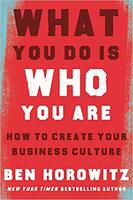
 I really enjoyed Ben's previous book, The Hard Thing About Hard Things (especially the rap intros to each chapter). I recently heard on Tim Ferriss's podcast about Ben's newly released book, What You Do Is Who You Are: How to Create Your Business Culture. Based on how much I liked the first book, I decided to read the new one.
I found the stories and historical anecdotes interesting, and I also enjoyed hearing more "war stories" from Ben about his previous startups. I did enjoy this second book a little less than the first; its core messages were less impactful/applicable. The beginning and end of the book were solid, but the middle didn't seem to connect and flow as well in one cohesive narrative. As a book focused on culture, it did teach some important lessons; I just was hoping it would've been weaved together as well as the first book. In any case, it was still enjoyable and instructive. Below are some of my notes and takeaways from the book.
0 Comments
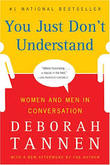 I love language and psychology, and I had a book about cross-gender linguistic differences on my reading list for a while that I finally finished: You Just Don't Understand by Deborah Tannen. The book was written by a sociolinguist who studies the differences in the way people talk and how that impacts their relationships and work. She found that the differences between men and women are as vast as the differences between cultures across the world. Her book featured analyses of transcripts of children speaking to each other, and I enjoyed this type of primary source evidence. The main themes and my takeaways from the book are the following:
I found the book to be a bit long and drawn out, and many of the points sounded too much like generalizations. I would've preferred more quantitative information as well as information about the differences within men and women, as I felt like within each category there is a large range by which each person differs from the gender stereotype. Nonetheless, I didn't find myself disagreeing with her points, and I enjoyed the collection of stories and ways she mentioned the book's lessons can be applied to work and personal situations.  I recently discovered Leninade soda, and it was the highlight of my day. The soda was alright, but the bottle design was hilarious -- so many little nuanced jokes and plays on words.
My wife also recently found Russian Guy/Girl Problems (and their respective Facebook groups: M/F), and we laughed literally for 45 minutes straight the first time we reviewed those sites. (We later contributed a handful of our own nuggets of wisdom.) There's just something so funny in our experiences that are so different from mainstream American family lives. Laughing at ourselves about these differences unites us together and helps us feel like we're not alone in fending off bags of food from our parents or extra jackets to wear. I believe that every culture has these little "weirdnesses," and I'd love to hear how other cultures might be similar to or different from Russian in their attitudes towards food, children, dating, etc. I would bet the similarities outweigh the differences. So off the top of my head, here are my top 10 "common" Russian experiences ("problemi") that resonate with me most. Not everything I list is my own personal experience or representative of my family; some of them are, and some of them are more general impressions I get from talking with friends. Leave a comment to share your own experiences (or your reaction). 1. Exotic food. The top concern of any day, any person, any babushka. What did you eat today? Everyone eats these foods at least weekly; how could you not?
3. Hyper-involved parents. Until you are 100 years old and both of your parents have passed away, you can expect your phone to ring at least 3 times per day with urgent inquiries into your health, location, recent food consumption, and plans for all of the above for the next 2 hours until the next call. I know people who are 50, 60, 70 years old and whose parents are still calling to see if they got to their destination safely. This is obviously charming and well-intentioned, and it warms my heart to feel loved. But sometimes, it's a bit too much (like when your mom texts you on a date asking you if you brought a jacket). Every detail of your life becomes a source for panic. One of my favorite worries is the skvaznyak (draft), like when there's a window or door open and some slight breeze coming through the house. This can sometimes be cause for the loudest yelling you've ever heard. 4. Super strict laws on relationships. Sure, they'll entertain your fancies to date people you want to according to higher-level traits like "personality," but this is all a sham; all that matters in the end is that you date someone of the same ethnic background and without question religion. Oh, and you must get married soon and have kids. 5. You can have any job, as long as it's lawyer or doctor. 6. Your mother's only happy if you're fat and hot. (Feeding you enough and ensuring you are warm are the top concerns of every mother.) 7. Clothing should be nice, upscale, and certainly not raggedy or "street"-looking. After all, you never know who you'll run into from the "community," and you can't embarrass the family. We even have a saying for when we see each other: "nashi lyudi v Hollywoodi" (our people in Hollywood -- but it rhymes nicely in Russian). Oh, and don't forget to take a jacket (even if it's 100 degrees or you're in Las Vegas). 8. Family respect is as important as if you're an Italian mafioso. Daily phone calls to all family members and weekly visits are the norm. Every time you visit someone, you fix their VCR programming, internet, and check their mail and bills. That's just what family members do for each other. Oh, and they make you sit down for "chai" and eat. The "You're not hungry and you're vegetarian? OK, I make you lamb" part from My Big Fat Greek Wedding is exactly what I'm talking about. 9. Don't you dare break a superstition. Too many to keep track of; I keep learning new ones every year I had never heard of. Here's a sampler:
|
Archives
February 2023
Categories
All
Subscribe |
 RSS Feed