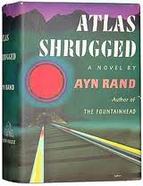
 I haven't updated my Facebook "favorite books" section since I opened my account about 7 years ago. But after I read Ayn Rand's Atlas Shrugged, I knew it was worth the update.
There was something so obvious, deep, and profound about the book that resonated with me. I love its emphasis on reason and production as well its focus on concrete details rather than vague, wishy-washiness. Part of me felt embarrassed while reading the book because I found myself to be guilty of some of the "bad" behaviors/thought processes/language described in the book, and now I have a much stronger foundation and framework within which I can consider what ways of thinking and doing are better. I liked how she used the book -- a work of fiction -- to teach her lessons and philosophy through stories and characters. It made the lessons so much more vivid and memorable. I also enjoyed her writing simply as well-chosen words of English beautifully crafted together; I'm shocked I didn't encounter this book in any English class during my entire education. And to be written by an immigrant no less. One thing I kept wondering about is why the "smart" characters (the "movers") never actively tried to change/fix the system but instead chose to abandon it for a fresh start. I'm curious what other readers think. The book was also my first introduction to Ayn Rand's Objectivist philosophy, which is defined broadly as "the concept of man as a heroic being, with his own happiness as the moral purpose of his life, with productive achievement as his noblest activity, and reason as his only absolute." Below are some of my own notes/takeaways from the book.
2 Comments
9/18/2013 04:29:20 pm
This note on Atlas Shrugged has conveyed a lot about this book. I am happy to hear that you are going to list this book as one of your favorite book in the facebook. Since book emphasis on reason and production as well as on concrete details I felt like reading it. Your comment will be posted after it is approved.
Leave a Reply. |
Archives
February 2023
Categories
All
Subscribe |
 RSS Feed