Picture
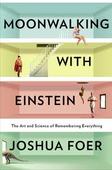
When I heard the Dean of UCLA Anderson mention Moonwalking with Einstein, I was caught off guard. The title was definitely unusual, and I had no idea what it was about. I knew it was about memory and psychology, and I figured it was worth a shot.

I was definitely in for a treat. The book follows the story of the author, who was a journalist in his twenties and got randomly into the "memory training circuit" and decided to give the techniques a shot by trying to see how well he could improve his memory. He ended up doing quite well: winning the US Memory Championship and making a lot of deep friendships with Mental Athletes (MAs) around the world.

The book was a really fun read, and I definitely learned a lot about memory and the history of memory techniques. In addition, I loved the philosophical discussions about the role of memory and how important it is to develop and cherish it for our human nature. It's also inspired me to look into a lot of the primary sources mentioned within it and to perhaps try to train myself similar to how the author did. The only question is when I can find the time to do that....

Below are my main notes on the text. I definitely recommend this book to anyone interested in psychology, memory, and general displays of awesomeness and freakish nature.

Ch. 1: The smartest man is hard to find
  • US memory championship
  • Brains harder to quantify than braun
  • Ben Pridmore was reining memory champion
  • Experience is sum of one's memories
  • Wisdom is sum of one's experience
  • Better memory => better person
  • Pridmore said it's just technique that anyone can learn
  • Mental Athletes (MAs)
  • Use the "Memory Palace" technique developed by the Romans
  • Tony Buzan marketed mind techniques
  • Simonides developed "method of loci"
  • Food intake affects brain
  • Memorizing as a mental workout
  • "Brain gyms" software
  • At first, memory was stored inside and considered important; now it's in books and computers and seen as less important
Ch. 2: The man who remembered too much
  • The Mind of the Mnemonist book
  • Study of people with abnormal memory skills
  • Normal people: the "curve of forgetting"
  • Picture recognition test: memory for images excellent among all
  • Photographic memory is a myth
  • Study Subject in study had automatic synesthesia
  • Memory is pattern of connections between neurons
  • Memory not searchable; just accessible by cues
  • Study Subject's memories were stored and organized linearly
  • Install memory images along a real street
  • Study Subject was crippled by inability to forget
  • London taxi drivers have intense memory and test requirements
  • Cabbies' brains changed and reorganized to adapt to job; "neural plasticity"
  • Superior Memory book
  • Brains of MAs had same IQ and same structure as control subjects in fMRI; difference was that different parts of brain used when memorizing (using visual and spatial navigation parts of brain)
  • Consciously converting data into images placed on mental roadmap
  • "KL7" club: Knights of Learning
  • Manufactured synesthesia
  • Turn names into visual joke on name/sound
Ch. 3: The expert expert
  • Got a coach named Ed
  • Learned about chicken sexing industry: determining gender of chickens is a bit deal; technique requires intuition to quickly and accurately work
  • K. Erickson developed "skilled memory theory"
  • Tested experts
  • Tested author for baseline memory skills and followed him as he trained to see if his memory could improve
  • Erickson studied experts. Found it takes 10,000 hours of training to become expert that can process enormous information in sophisticated ways and get past "magic 7" number (short-term memory limit).
  • Chunk in order to remember more
  • Use associations in long-term memory to see world differently
Ch. 4: The most forgetful man in the world
  • Story of severe documented case of amnesia
  • Monotony compresses time; novelty expands it
  • Creating new memories stretches psychological time
  • That's why it's so important to travel, do interesting work
  • Life speeds up when becomes less memorable as we grow up
  • Hippocampus converts short-term to long-term memory
  • Unconscious
  • Declarative/explicit vs. non-declarative/implicit/unconscious memories
  • Unconscious memories don't require hippocampus
  • Semantic/concept memories vs. episodic memory in time and space
  • Ribeau's Law: memories not static; they change as we age and with events
  • Sleep consolidates memories
  • Infantile amnesia: brains maturing quickly, neocortex developing in first 3 years, lacks language and schemas
Ch. 5: The memory palace
  • Elaborative coding
  • Brains aren't adapted to current information age
  • Simonides invented art of memory
  • Rhetorica ad Herenium book
  • Natural memory: hardware
  • Artificial memory: software
  • Method of loci
  • Memory palace
  • Populate intimately familiar place with images
  • Start with house you grew up in and arrange items along a path
  • Add multiple senses to each image you put down
  • Add inappropriate images so it's funny and lewd
Ch. 6: How to memorize a poem
  • Walk around and rediscover old places and know them very thoroughly
  • Need 12 memory palaces to begin; grow to hundreds
  • Memory training about growing as a person; learning old texts gives us guidance
  • Memory training was huge in old civilizations
  • Americans greatly behind Europeans on memory training
  • For memorizing poems, put image of each topic not each word (due to efficiency and stability)
  • "Topic" comes from Greek word for "place"
  • That's the root of the phrase "in the first place"
  • Brains better at remembering meaning than verbatim text
  • Homer's works were a collection of oral bards' memories
  • Cliches are memorable, repeated, visualized phrases; critical for memorability
  • Jingles hard to knock out of head
  • Song is the ultimate structuring device for language
  • For abstract words, imagine similar sounding word
  • Break word into syllables and find images that start with same letter
  • Men's technique for poem memorization: just images
  • Women's technique for poem memorization: understand how poem feels, associate parts of poem with emotions
  • Break lines into beats with different emotions (Method Acting technique)
  • Quirky subculture of memory only in Oxford competition (small group)
  • Golden age of memory died
Ch. 7: The end of remembering
  • Before writing was invented, everything had to be preserved in memory
  • Now, we remember very little because of calendar, GPS, photo albums, speed dial, etc.
  • 1/3 of Brits can't remember their home phone number or more than 2 friends' birthdays
  • History of writing: printing press, word spacing, table of contents, indexes in books
  • Training memory classically was to build index of all we have read
  • External memory: online and electronically
  • Even more futuristic: Microsoft Lifelog
Ch. 8: The okay plateau
  • Memorize random stuff around you
  • "Major System" to remember numbers
  • "Person Action Object" system (PAO) for longer numbers: converts numbers to images
  • Online Brain Club forum
  • 52 cards mapped to PAO images of 3 so it's just 18 groups of images to memorize
  • Expertise improvement: speed-typing plateau
  • Run on autopilot at some point: "okay plateau"
  • Top achievers keep out of the okay plateau and do deliberate practice 
  • Technique, goal oriented, constant feedback
  • Have to practice failing
  • Put yourself in mind of someone better and see difference between you and them
  • Start going at pace quicker than can go by 10-20%, make mistakes, but improve
  • Barriers and records constantly get broken because psychological, not physical
  • Memory like a musical instrument; can learn and improve
  • Set up spreadsheet to track practice sessions, metrics, progress, graph everything
  • Enforces mindfulness and attention when trying to memorize names or details
Ch. 9: The talented ten
  • Is all this a form of mental peacocking or useful?
  • There's a private school in the Bronx that teaches based on memory techniques; it is much better performing than other schools
  • In education, rote memorization got replaced with experiential learning
  • Tony Buzan was Inspired by the Major System by a prof in his college
  • Wanted an "operator's manual" for how to run his brain
  • Realized education has the wrong definition of smart
  • Invented "mindmapping" notetaking technique
  • Said invention is a product of inventorying and indexing
  • Use your head book
Ch. 10: The rainman in all of us
  • People do 20% worse in memory competition than in practice
  • Met Daniel, who was called the "Rain Man" (big memory and language capabilities)
  • Rain Man film
  • "Savantism" disease
  • Single skill vs. general talent
  • Savants often accompanied with disability
  • Born on a blue day book
  • Effortless memory of his; no technique
  • Met with Daniel
  • Found him to be actually ordinary
  • Synesthesia disorder
  • Asberger syndrome: high-functioning autism
  • Resources: World Wide Brain Club, Memory Circuit Stat Server
  • Kim Peek another savant
  • Damage in left brain common
  • When left brain damaged, right brain opens up hidden inner skills in all people
  • TMS technology can zap left brain and turn on savant skills in people
  • Author was skeptical Daniel might not be a savant, maybe just trained mnemonist
  • In 19th century, savant was great term
  • But now became freak condition
Ch. 11: US memory championship
  • For practice, wore ear muffs and horse blinders/painted safety goggles to keep concentrated
  • Relax one week before
  • Got new record in speed cards by doing 3 cards at a time
  • Won memory championship
Epilogue
  • People later just wanted to see him do tricks
  • Went to World Memory Championship; finished 13th place
  • Offered KL7 membership; had to drink 2 beers, memorize 49 digits, kiss strange woman's knee 3 times to be inducted
  • Got retested in Florida by expert researcher
  • Improved memory skills but still kept misplacing car keys
  • Working memory still was limited
  • Software upgraded but hardware still the same
  • Practice makes perfect, but must be deliberate practice
  • Key is time and commitment
  • Learned to be more mindful of world around him
  • Hard to find occasion to use old techniques
  • How we perceive world is based on how we remember
  • Memories are the seeds of our values
  • Memory training is about nurturing our humanity
  • Experiment was over; says he's done competing


Comments


Your comment will be posted after it is approved.


Leave a Reply