 My wife and I went on a few long road trips recently, and we passed the time in the car listening together to the audio version of Lean In: Women, Work, and the Will to Lead by Sheryl Sandberg. The book ended up sparking a number of deep conversations and questions, and Suzanne even took notes! Through the process, I learned a lot about my wife, the perspective of professional women, and what implicit biases I personally have.
I liked how Sheryl was very realistic and honest about her own struggles and the (sometimes blatant) discrimination she faced and which others routinely face. I liked how she gave concrete examples/scripts and shared a lot of meaningful personal details. I learned to appreciate much more how hard my wife works to achieve her goals and gain respect in ways that men receive a lot more by default in professional settings. I understood much more deeply the difficulty of balancing work and family life for a woman, and I really liked Sheryl's tips for professional couples. I saw my wife learning a lot from Sheryl's example and feeling like she's not alone in many of the feelings she has, like "imposter syndrome" (which I share too) and struggling against the default stance of not leaning in when there are risks. I learned some new ideas and models for how a couple can raise a family while also pursuing meaningful goals as independent adults. I also recognized better the role I can play in supporting her and pushing her to go after her dreams and believe in herself. Below were our biggest takeaways from the book. I feel lucky to have Suzanne in my life and to have been able to share this experience with her, learning about each other and the world around us.
0 Comments
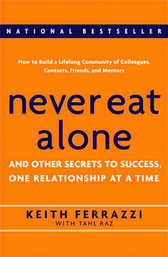 I had been reading Keith Ferrazzi's Never Eat Alone for several months now, slowly making progress through it on my Kindle for iPhone while waiting in line, doing errands, etc. I finally finished it last week and am happy to report my biggest takeaways from the book. Overall, the book is pretty famous and has been around for a while. I feel that many of its core lessons have spread widely and are now much of the foundation in a lot of the networking literature and how-to guides out there (including what is taught at UCLA Anderson and its career center). This is a good thing, as much of the philosophy in the book makes sense. The overall lesson is that success in business and in life revolves around relationships, and one can improve one's skills in relationship building and maintaining through discipline and practice. Here are my personal biggest takeaways from the book:
The book was definitely enjoyable, easy to read, and useful, and I look forward to trying out some of its recommendations soon.   It is not the oath that makes us believe the man, but the man the oath. --Aeschylus
I've been attending many networking events recently and pushing myself to improve in this important business function. I'm naturally a more quiet, shy person, so getting out there and really making strong connections to new people takes a lot of effort and discipline on my behalf. I've been learning many sides to doing this properly, such as overcoming shyness and proper voice and presentation skills. I've also been reading some of the famous networking books, like Dig Your Well Before You're Thirsty. The information below comes from a variety of sources and my own synthesizing to bring out what matters most to me when I aim to interact effectively with others and how I enjoy others interacting with me. Curiosity A lot of my own inertia when it comes to networking is a result of nerves or shyness. I see others talking, and I feel like I shouldn't intrude. A second source of insecurity comes from wondering what to talk about. A great way to get over both of these points and to be genuinely present in the moment when approaching others is having a strong sense of curiosity -- for the other person, their background, their skills, and any serendipitous connections that can result from your meeting them. You can be curious about where they come from, what difficulties they've overcome, and also how you fit in with their life, such as if you can help them in some way or give them some important advice. I honestly believe that there is something unique, special, and significant about every single human being out there and that every person (and animal) can teach me something useful that I didn't know before. This makes it easy for me to enjoy spending time with people who may not be of any "value" to me now but whom I can simply get to know and learn about and someday perhaps give assist or be assisted by. By coming from the position of being really interested in meeting and learning as much as you can about all other people around you, it will be much easier to approach them and find topics of conversation. Note that this is often not the way even gregarious networkers approach the situation. Often people come to meet you who are only interested in learning whether you are "high up" and can somehow help them, or if you have something they need. This frame of mind leads to a much poorer conversation and leaves a much worse taste in the other person's mouth. By coming instead from a frame of mind of curiosity, giving, and reciprocity, you can have a much more enjoyable and effective conversation. Attention I'm sure everyone has had this happen to them: You meet someone new at a cocktail reception; you ask them about themselves and listen carefully; then they ask you about your background, and as soon you start speaking, they are looking around the room and not hearing a word you're saying. It's extremely frustrating and a waste of time and breath. I've caught myself looking around the room at times and always stop myself when I notice this. At those moments, I ask myself why it is that I'm looking around and whether it's something about my not wanting to talk to this person or my being interested in something else. As soon as I realize that there is a lot to be curious about in the other person, I can quickly snap back and pay attention without interruption from that point on. The most common reason why I might start paying less attention to someone is if I don't understand a lot about what they're talking about. If someone is talking about something that's interesting to me or about my field or career, I won't have trouble paying attention. Instead of letting my attention wander when it's a subject I don't know much about (or terminology I'm not familiar with), I can use the opportunity to learn about something new and ask questions. There is the fear of looking stupid by asking a dumb question, but I think it's much better to show interest, even if on a basic/naive level about a new field, than to stop paying attention. Paying attention to someone through active listening, eye contact, repeating what you've understood or heard, not interrupting, and asking intelligent questions afterward is an essential type of respect in all interactions. Following Up This point can be boiled down to "just do what you promise." It is similar to the points I made about phone calls and emails: when you tell someone you will do something, just do it. This is especially important when networking. A big part of networking is helping each other, and it's very hard to help someone or feel dependable if you make too many commitments or just forget to follow through. When you meet someone whom you can genuinely help, it's not only your responsibility to offer them assistance but to also see to it that you help them and contact them after the event is through. As soon as I get someone's business card, if I owe them anything or have any further questions or things to discuss, I note it down on their card (or in my phone). Then, when I get home, I shoot off the necessary emails or set up the right tasks on my to-do list (in addition to adding them to my contact list). With so few people who follow up thoroughly after meetings, you can really set yourself apart by being proactive in this regard and showing people that you care. |
Archives
February 2023
Categories
All
Subscribe |
 RSS Feed