
Max Mednik

  • Home
  • Résumé
  • Interests
    • DJing and Music
      • Reading
        • Photography and Film
          • Psychology and Self-Improvement
            • Spirituality
              • Travel
                • Sports
                  • Romance and Weddings
                    • Magic
                      • Community Service
                        • Scuba Diving
                          • Theatrical Lighting Design
                            • Cirque du Soleil
                            • Contact
                            • Search
                            Lessons Learned from Week 4 of Fall Quarter 10/31/2011
                            0 Comments
                             
                            Picture
                            Ethics
                            • Good managers can very easily make bad decisions due to several rationalizations: won't get caught, within the realm of law, what's allowed or typically done
                            • Complexities in the decisions of laying off staff and interplay with affirmative action policies. One approach is a staged strategy where the initial round is according to one criteria like performance and the next is according to a different objective like diversity.
                            • Building a good board: diversity of perspective, independence, skin in the game
                            Behavioral Finance
                            • Analyst recommendations are a contrarian indicator, especially if employees of the underwriter
                            • IPOs typically underpriced to give kicker to client on sell side and to give profit to preferred clients who buy on asset management side
                            • In long run, IPOs underperform
                            • Managers game EPS by manipulating earnings; way more times that EPS comes in a penny above a threshold than a penny below a threshold
                            • Investors overreact to high-strength, low-weight recommendations and underreact to high-weight, low-strength recommendations
                            • Can only make money investing if you have some informational advantage or understand sentiment better than others
                            • Value works better than glamour
                            • Avoid doing what the herd does
                            • Stock rising witho good financial backing will not continue to rise for long
                            • Value stocks: ROE + steady earnings growth + many positive earnings surprises; low debt; healthy or growing profit margins; not a homogeneous product; competitive advantage; public for at least 10 years; low P/B and P/E (P/B < 1); PEG < 1; current assets > current liabilities (can pay current bills)
                            • Stocks heavily purchased by small investors do badly in following periods
                            • Find proxies for retail sentiment (naive investors); contrarian indicator
                            • High asset growth stocks underperform relative to low asset growth (naive extrapolation/overreaction)
                            • High accounting accruals is bad sign (boosting income artificially)
                            • Piotroski f-score works well, implies market not efficient; uses 20% of stocks with highest B/M ratios
                            • f-score: sum of 9 binary signals (not risk related); healthy companies, less risky/non-interesting companies are undervalued but more profitable
                            • High B/M can mean undervaluation or distress. f-score separates undervaluation from distress, works as investing strategy.
                            • More evidence for non-efficient market than efficient market
                            • Psychological biases affecting investors: confirmation bias, hindsight bias, representativeness, anchoring, conservatism, availability bias, overconfidence
                            Doing Deals
                            • Employment compensation issues
                            • Severance
                            • Say for pay
                            • Individual benefits
                            • Cause vs. non-cause termination
                            • Change of control terms in executive employment contracts
                            • Perks
                            • Benefits
                            • Restricted stock vs. restricted stock units vs. incentive stock options vs. non-statutory stock options
                            Add Comment
                             
                            Notes on Blue Ocean Strategy 10/19/2011
                            2 Comments
                             
                            Picture
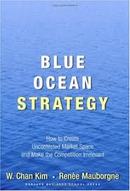
                            I recently read Blue Ocean Strategy by Kim and Mauborgne. Its focus was on ways to create and release products that are so different from the competition's that the "ocean" is blue, not bloody red. It was a quick, useful read, and what I enjoyed most were the company examples the book analyzed. I found the sections that actually prescribed theory and mechanisms for creating blue ocean innovations the most lacking in specificity, but the overall frameworks made sense to me.

                            Below are my main notes and takeaways.

                            Part 1: Blue Ocean Strategy

                            Ch. 1: Creating Blue Oceans
                            • Cirque du Soleil versus Ringling Bros.
                            • Red ocean: bloody competition
                            • Blue ocean: expands industry boundaries and competition irrelevant
                            • Inventions spur blue oceans
                            • No perpetually well-performing companies
                            • Looking at industries and strategic moves is more informative than specific companies
                            • Value innovation: create so much value that competition irrelevant
                            Ch. 2: Analytical Tools and Frameworks
                            • Strategy canvas
                            • Value curve/strategic profile
                            • Don't look at current competition; look at alternatives and non-customers
                            • 4 actions framework
                            • Eliminate, reduce, raise, create (grid)
                            • Example: Yellowtail wine
                            • Example: Southwest
                            • Extreme focus on value innovation and letting all else go
                            • Have much different value curve than competitors; make tag line that's very memorable and different from others because product so different
                            • Focus, divergence, compelling tagline
                            Part 2: Formulating Blue Ocean Strategy

                            Ch. 3: Restructuring Market Boundaries
                            • 6 paths framework
                            • Challenge 6 fundamental assumption
                            • Look across alternatives, not just substitutes in an industry
                            • Example: NetJets
                            • Look across buyer groups and customer chain for unaddressed segments
                            • Look across complementary products and services, whole customer experience
                            • Look across functional or emotional appeals and include both
                            • Examples: Swatch, Body Shop, Cemex, Vanguard, Pfizer/Viagra, Starbucks
                            • Look across time, trends
                            Ch. 4: Focus on the Big Picture, not the Numbers
                            • Go study users with your own eyes
                            • User types: Pioneers, Migrators, and Settlers
                            Ch. 5: Reach Beyond Existing Demand
                            • Think about commonalities in non-customers rather than finer segmentation of existing customers
                            • 3 tiers of non-customers 
                            • Non-Customers who slightly use your service
                            • Refusing non-customers
                            • Unexplored non-customers
                            Ch. 6: Get the Strategic Sequence Right
                            • Test for buyer utility surplus over price
                            • Test for feasibility of cost structure
                            • Partnering
                            • Blue Ocean Idea (BOI) Index
                            Part 3: Executing Blue Ocean Strategy

                            Ch. 7: Overcoming Key Organizational Hurdles

                            • Tipping point leadership
                            • Don't convince through numbers or reports
                            • Have people experience problems firsthand
                            • Focus on key influencers in organization
                            • Focus on acts of disproportionate influence
                            Ch. 8: Build Execution into Management
                            • Get buy-in
                            • 3 E principles
                            • Engagement
                            • Explanation
                            • Clarity of Expectations
                            Conclusion: Sustainability and New Blue Oceans
                            • Watch competitors' value curves over time and innovate when they converge with yours
                            2 Comments
                             
                            Notes on G-d No by Penn Jilette 10/17/2011
                            2 Comments
                             
                            Picture
                            As a fan of Penn and Teller, when I heard that Penn released a book, I knew I had to read it. I didn't know it would turn out to open my mind to new ways of thinking about religion, science, and magic, and make me laugh so much.

                            It was especially a treat to hear Penn himself read the book in the audio version.

                            Below are my main notes and takeaways from Penn Jilette's G-d, No!.

                            Atheism
                            • Being atheist means saying I don't know
                            • Richard Feynman said I don't know
                            • Work hard to learn but state clearly the limit of your knowledge
                            • Not the belief that science knows everything
                            • (Lots of jokes and curse words omitted.)
                            • Humility of saying I don't know and being an atheist
                            • Believing in G-d means saying you know and understand
                            • If you say, "I don't know," it means you don't believe until you see evidence. It doesn't mean you say it will never happen.
                            • Believing in prayer that can change the world is arrogant since you believe you can make G-d change his mind. (I'm curious what Penn says about some studies that purport to have studied prayer's effects.)
                            • Started with a dishwashing job as a kid
                            • Suggestion: The highest ideals are human intelligence, creativity, and love. Respect these above all.
                            Art and magic
                            • The purpose of art is to inspire.
                            • The purpose of art is to stand naked on the stage.
                            • Loves the purity of Siegfried and Roy
                            • S&R created the big Vegas magic show; before, everyone just toured.
                            • Even though he made fun of them, they were the true artists.
                            • He stood by Roy's side in hospital

                            What's the g on the joint?
                            • What's the gaffe, the trick?
                            • Likes word "trick" because any trick is an illusion, and it should be that way.
                            • Should never lie to audience and want to make them believe; should lie and make it really obvious you are lying
                            • Penn started as juggler
                            • Can't fake or lie in juggling
                            • David Blaine, Chriss Angel wanting to make others believe when they lie
                            • Even if he really did some stunt, it doesn't matter.
                            • Still all just show biz stunt
                            • Never science or reality
                            • (Blaine still his friend)
                            King of the ex-Jews
                            • They always greet the audience after their show.
                            • Amazing Randy was his mentor.
                            • Richard Dawkins was his idol.
                            • Penn married stalker fan girl he met after show.
                            • Met ex-Orthodox Jew who became atheist after reading his book
                            • Atheist baptism naked parties with no alcohol or drugs; just celebration of loving and life
                            • Ate traif together
                            • Suggestion: Do not put things or ideas above human beings.
                            Fake tits, tattoos, and autotune
                            • Fake tits: all that matters is how much the owner of the tits likes them
                            • Never judge a stripper; she is showing herself better than you can.
                            • No real magic secrets; all secrets ugly.
                            • Real secret is that magicians are guarding an empty safe.
                            • Likes tattoos and big fake tits because they're a celebration of technology, humanity, and individual control
                            • Autotune technology makes all voices sound in tune with music -- amazing
                            • All of these are atheist
                            • Proselytizing is a moral imperative
                            • If you believe in truth, you must share it.
                            • Robert Houdin first came up with magicians dressing as audience (hat and tails) instead of like wizards.
                            • Agnostic is an intellectual term, not a religious one.
                            • Is there a G-d? You can say "I don't know."
                            • Do you believe in G-d? You must give a yes or no answer.
                            • Must speak what you think; spit it.

                            Learning to fly, strip, and be weightless on a 747
                            • Vomit comet: airplane ride going up and down to make you feel weightless.
                            • ZeroG company
                            • It's easier to be yourself when you decide there's no chance you will be a supreme court justice.
                            • Went to Club Baths gay bath in SF just to prove he could and wasn't a pussy
                            • No one approached them or hit on them; was pissed at rejection and didn't understand.
                            • (Funny story about sex underwater while diving omitted.)
                            • Suggestion: Love your family. Love is better than honor.
                            Libertarian atheism
                            • Celebrates secular commercial "X-mas" tradition
                            • Libertarian atheist
                            • Be open with your agenda.
                            • Both of his parents died when he was performing.
                            • It's ok; keep performing, joke, embrace pain of life and live on.
                            • Lies are ok when for good purpose like family health.
                            • Libertarian: Should help others yourself; don't use government to force people to do something for you.
                            • You don't have to do anything for your country; just love your family and take care of others yourself.
                            • Hates TSA
                            • Wants to start a Pork, Bacon, and Kiss Airline
                            • 9/11: people attacked liberty, and we lost more liberty.
                            • Most people in the world are good.
                            • Allow people to bring anything they want on planes, and let the bad guys racially profile others. Good people will defend each other.
                            • Blame faith, not specific religion, for terrorism.
                            • "The Amazing" conference in Vegas
                            2 Comments
                             
                            Lessons Learned from Week 3 of Fall Quarter 10/15/2011
                            0 Comments
                             
                            Picture
                            Ethics
                            • Compliance (follow law) vs. Integrity (values-driven, culture that supports ethics)
                            • Role of religion/spirituality/personal values in business. When should they be separate, and when must they align?
                            • A company's role in individual freedom vs. protection of employees. If a company must restrict certain jobs to specific demographics due to safety reasons, is that discrimination?
                            • Publishing as yourself vs. representing your company. This is particularly relevant today, where people have multiple social identities online (and companies have their own online identities as well). I think the most important thing is that people be very clear on whose thinking they are promoting and what interests and affiliations they have.
                            • Good book: Memos from the Chairman
                            • What should be the role of auditors and accountants in ethics?
                            Behavioral Finance

                            • Technical analysis works (memory in stock prices).
                            • Irrationality -> mispricing -> corrected later
                            • Divergence
                            • Head and shoulders (powerful in forex)
                            • Moving averages work (in long-run 26 weeks, short-run 4 weeks; hold 2 weeks - 1 month).
                            • Momentum strategies work.
                            • Support level due to "left digit bias/effect" (e.g., $9.99 pricing)
                            • Mutual fund cash positions are a contrarian indicator.
                            • Monthly put/call ratio is a contrarian indicator.
                            • Momentum strategies highly profitable
                            • If stock we buy goes up, we buy more; if it goes down, we don't sell and attribute it to bad luck due to cognitive dissonance
                            • Prices drift up over time after stock added to buy list or has earnings surprise (not immediately priced in).
                            Doing Deals
                            • This class was a real treat, as we got to hear from Jason Nazar, CEO of Docstoc, and Dave Travers of Rustic Canyon (Docstoc's VC)
                            • If you don't know your big "why," the what and the how will always distract you.
                            • Jump into situations you don't know, prove out demand, figure out supply afterwards
                            • Meet 4-6 entrepreneurs and investors per week, maintain relationships and build new ones
                            • VC negotiations are a test of the entrepreneur as a negotiator
                            • In deals, people are more important than the terms.
                            • Right way to think of "price"/"valuation" in a VC deal: payoff curve of payment (to a specific party) versus exit price
                            • Best situation for co-founders: different skills and different ownership stakes
                            • Negotiation tip: first create value if you want good terms.
                            • Negotiation tip: seek to understand before you seek to be understood.
                            • Negotiation tip: Start with the big points, then do the little things after.
                            Add Comment
                             
                            Notes on Steve Blank and the Second Decade of Customer Development 10/13/2011
                            5 Comments
                             
                            Picture
                            I had the pleasure of seeing Steve Blank at a LeanLA event at UCLA Anderson last week. It was epic. Everyone in the SoCal tech community came out, and I learned a lot of useful stuff from the creator of the customer development movement himself.

                            Below are my notes on the talk.

                            Background
                            • Steve did 8 startups in 21 years
                            • Retired because wanted to see his kids grow up
                            • See his post: Epitaph for an Entrepreneur
                            Introduction
                            • Realized so many processes for product pev but no processes for customer dev so wrote a book about it based on what he learned

                            What's a startup?
                            • 6 types of startups
                            Lifestyle startup
                            • Known customer with known product
                            • Pay for their hobby
                            • Surfing instructor
                            Small biz startup
                            • Work to feed family
                            • Grocery store, plumber
                            • Exit criteria: profitable biz, existing team
                            • 99.7% of all companies employ 50% of total US workers
                            • 5.7 million small businesses with < 500 people
                            Scalable startups
                            • Unknown customers
                            • Unknown features
                            • TAM > $500M
                            • Attract VC because VCs want obscene returns (like the mob)
                            Search, build, execute
                            • Startups search for a scalable biz model
                            • Founders are not going to be CEO of big company because they will get fired
                            • Large companies execute on biz model
                            • In middle, founders depart and professional mgmt comes in
                            • When you find a repeatable biz model, VC will then figure out if you will be the executing operating exec or someone else
                            Buyable startup
                            • Goal is to solve problem for internet, mobile, gaming apps
                            • Sell $5-50m acquisition
                            • Super-angels fund these
                            His startup definition: a startup is a temporary organization used to search for a repeatable and scalable business model.

                            Business model found
                            • Product-market fit
                            • Repeatable sales model
                            • Managers hired
                            Big companies good at sustaining innovation
                            • Existing market, known customer
                            • Known product features
                            • In a large company, a disruptive innovation creates a new division
                            • Or external competitor does disruptive innovation
                            • Counter disruption by building, partnering, or acquiring IP, talent, product, customers, business
                            Social entrepreneurship startups
                            • Don't want to make money
                            • Solve pressing social problems
                            • Social enterprise: profitable
                            • Social innovation, new strategies
                            Each of 6 startup types requires different skills
                            • Startups are not smaller versions of large companies
                            • Large companies execute
                            • Startups search
                            • Accountants don't run startups
                            • Startups require metrics, not accounting
                            • Save accounting until you have something to account
                            • Startup metrics are only ones that matter for board meetings
                            • Customer acquisition cost
                            • Viral coefficient
                            • Customer lifetime value
                            • Average selling price / order size
                            • Monthly burn rate
                            Customer validation versus sales
                            • Large company sales are scalable, have price list, revenue plan, data sheets; VPs of sales play golf, have gray hair, have a sales organization that sells in a scalable way
                            • Startups look for customer validation
                            • Large company execs comfortable with certainty and can't adjust quickly
                            • Startups: pricing, features unstable, one-offs, sales done by founders
                            • Sales titles the same but the job specs are completely different
                            • Startups: agile development, not QA and Tech Pubs
                            • Maximize releases per day
                            • Continuous learning
                            • Minimum feature set
                            • Large companies plan, business plans describe knowns, features for line extensions
                            • Startups model and test
                            • Focus on business model generation
                            • No business plan survives contact with customers
                            Business model: 9 building blocks
                            1. Customer segments
                            2. Value propositions/product or service
                            3. Channels: how deliver
                            4. Customer relationships: how will create demand
                            5. Revenue streams: what will pay for
                            6. Key resources: world class engineers, team
                            7. Key activities
                            8. Key partners, suppliers
                            9. Cost structure

                            Business model canvas
                            • Start with multiple business models and sketches
                            • These are just hypotheses

                            Customer development
                            • The founders get out of the building and search for the business model
                            • Customer discovery
                            • Customer validation (pivot back)
                            • Customer creation
                            • Company building
                            Use MVP in first 2 steps
                            • Smallest feature set that gets you the most orders/learning/feedback/failure
                            • Pivot = change in 1 or more business model components
                            • Iteration without crisis
                            • Fast, agile, and opportunistic
                            • Pivot cycle time matters
                            • Minimum feature set with instant customer feedback

                            Second decade: web, mobile, cloud
                            • Distribution channel: physical or virtual
                            • Products: physical or virtual
                            • Customers often teach you explicitly how to price the product
                            • First test customer segment and value prop
                            Student examples from Stanford Lean Launchpad class
                            • Lots of pivots
                            • Students blogged progress
                            • Photos of interviews
                            • Videos posted
                            • Surveys posted
                            • AB testing results posted
                            • Use Lean Launchlab

                            His slides on slideshare

                            Miscellaneous

                            • Slides on SlideShare
                            • Talk to press when your positioning has been stable for several weeks
                            • Dysfunctional families the best creators of founding CEOs because used to constant chaos and change
                            • Bring order out of chaos in life


                            Recommended books
                            • The Innovator's Dilemma
                            • The Innovator's Solution
                            • The Lean Startup
                            • Business Model Generation
                            • The Four Steps to the Epiphany
                            5 Comments
                             
                            Notes on Neuromancer by William Gibson 10/11/2011
                            0 Comments
                             
                            Picture
                            I finally made it through William Gibson's Neuromancer, which was on my reading list for a while. (I'm trying to mix it up a bit with some fiction.)

                            A ton has been written about this book, which many say was one of the most seminal works of science fiction of all time. I'll just concentrate on my own takeaways and the things I found most interesting in the book.

                            First of all, my biggest reaction came as a fan of The Matrix. Did the creators of the movies take 90% of their inspiration from this book, or is it just me? The locations, the scenes, the "jacking in to the matrix," even some of the characters (Molly/Trinity, Case/Neo) -- they're almost copies. I guess this might be an example of the saying, "imitation is the highest form of flattery" (or that "good artists borrow, great artists steal"). I love The Matrix, but I am now more down on it since I see it as less original.

                            Overall, I found the book extremely well-written and quite different in its language than other science fiction I have read. The biggest thing in the book that made me think was the issue of technology to change our physical bodies and minds -- upgrades and implants. Things like heads-up displays (augmented reality), improved physique, geolocation -- wait a minute, is this sci-fi or real life? It's exciting and scary that these things are converging. Should there be a line we draw? When are we no longer human? Or is humanity just defined by our brain/mind, so if we change everything else we're still human? What if we change/improve/fix our brain with a machine? What if a machine runs our brain?

                            The epilogue of the book was actually one of the most interesting chapters for me to read as it was written by another sci-fi author analyzing Gibson's work. The analysis focused on how Neuromancer was a projection of Gibson's past and present onto his vision of the future. How much of our hope (or fear) about the future is defined by our past and current reality?

                            Fun book -- definitely recommended to any Matrix fans out there.
                            Add Comment
                             
                            Lessons Learned from Week 2 of Fall Quarter 10/07/2011
                            0 Comments
                             
                            Picture
                            Ethics
                            • Interesting discussions and analyses of when bluffing is ok in business (versus poker). Does it make a difference when everyone knows the rules of the game or expects bluffing to happen?
                            • How to deal with doing business with someone when you don't agree with their end cause. One possible answer: do the business at cost so that your company and employees don't suffer from refusing the business but don't take profit in order to stay true to morals.
                            Behavioral Finance
                            • Glamour stocks (high price to cash flow, price to earnings, price to book) under-perform value stocks (and this has nothing to do with risk factors).
                            • High monthly trading volume and high variability in trading volume both predict low expected return in the following month. These effects are even stronger than the size and book/market effects.
                            • Irrational investor optimism causes high volume and is reversed out in the following month.
                            • Investors can't short sell equities as easily as buying, so negative opinions aren't as easily/quickly traded (priced in) as much as positive opinions.
                            • Retail Segment Effect (volatility from retail investors makes return reverse itself from overoptimism)
                            • "Naive Asset Pricing Model": No CAPM. No APT. Naive investors transfer wealth to sophisticated investors.
                            • It's possible to identify the most important characteristics for predicting returns, and these predictions beat the market considerably and work quite well on out-of-sample tests over a long period of time.
                            • Best-performing stocks have a relatively low level of risk.
                            Doing Deals
                            • TV economics: huge land-grab for channels
                            • All countries have followed the same path in TV adoption as the US did (going to 80-90%)
                            • To consolidate income, you must own economic majority and have control over management and CEO.
                            • To bridge gap in valuation negotiations, pay low multiple on initial income and then high multiple on rest, so if able to pull off growth, will pay more.
                            • Most acquisition failures due to post-merger integration (PMI) problems.
                            • Corp dev must fit with overall business strategy. What must we buy to succeed? Companies? People? IP?
                            • Keep a wishlist of companies you’d like to own.
                            • Track previous deals and how they performed compared to forecast when considering new deals someone brings.
                            • Companies really good at PMI: Cisco, GE
                            • Filter for culture meshing well with acquirer to prevent PMI problems
                            • A good M&A lawyer is a business-enabler; a bad M&A lawyer over-lawyers and puts in way too many clauses.
                            • LOIs are for the business people, not lawyers.
                            • In international business, people make deals with you as a whole person. They watch how you interact with their family, how you drink tea, how you spend days just socializing, golfing, and not talking about the business.
                            • The fewer warranties or hold-backs the seller wants, the more due diligence time will be required.
                            • Structure non-competes to cover payback period.
                            • Share Purchase Agreement does the acquisition, but Shareholder Agreement is the most important document after the deal is done.
                            • Shareholder Agreement determines who will run it post-purchase, what requires majority versus unanimous decisions, etc.
                            • Standard minority protections: sale of company, issuance of new equity, dissolution of company, related party transactions.
                            • Must discuss how to get out of the deal/terminate/carve out/divorce
                            • But divorce procedure rarely followed; so difficult that forces parties to talk and figure out some better plan.
                            • Clawbacks over 1-2 audit cycles (2 years of holdbacks to discover things not paid or not accounted for right)
                            • It's usually better to build than to buy.
                            • Leverage specialists and be an orchestra conductor.
                            • Have a PMI plan. Be honest with those who will get fired.
                            • Avoid joint ventures at all costs. If required, focus on the Shareholder Agreement (exit clauses and paths to full ownership)
                            • Models can be made to say anything.
                            • Know when to walk away from a deal.
                            Add Comment
                             
                            Lessons Learned from Week 1 of Fall Quarter 10/05/2011
                            0 Comments
                             
                            Picture
                            My second year is off to an incredibly busy start. Though my class load is not heavy, working on launching Ridacto, being a career coach, and TAing a class together make life pretty crazy.

                            Below are some of my biggest takeaways from my classes last week:

                            Ethics

                            This is a really challenging class that poses way more questions than it answers. In TAing the class, I'm lucky to hear the varying opinions of my classmates and consider my own viewpoint on how to act in various difficult situations.
                            • Integrity between personal and company values is key.
                            • Leadership and the Quest for Integrity argues that having prejudices or predispositions to handling various scenarios in specific, predefined ways can help solve many of the most challenging dilemmas.
                            • Three styles of leadership: political, directive, value-driven
                            • Ethics, optimization, and public policy (strive to find the intersection)
                            • Matrix to consider: 3 viewpoints (utilitarian, contractarian, pluralist) and 3 targets (individual, company, society)
                            Behavioral Finance

                            This class basically overturns everything taught in traditional finance classes and explains how the "real world" works in terms of actual trading behavior and stock performance results. We're going through the main academic articles in the field over the past 20 years and combining finance with psychology to better understand how people make (and should make) investment decisions.
                            • CAPM and APT are blatantly wrong (they aren't good theories for explaining or predicting reality).
                            • Market does not have any level/strength of efficiency.
                            • Psychology of investors and company fundamentals much better determining factors of performance
                            • Size and book-to-market ratios much better at explaining why returns vary from stock to stock than beta
                            • Characteristics of stocks (like fundamental ratios) have much more power to explain returns than risk factors (like beta).
                            • Value and contrarian investing work.
                            Doing Deals

                            This class is a very interesting blend between business and law and covers both the theoretical and real-world aspects of "making it rain [not in the club]." We work in teams of 2 business students and 2 law students to dissect unedited deal documents for a different deal each week, varying from financing, to acquisitions, to partnerships in a variety of different industries. I absolutely love being able to see real-world documents and understand how they evolved and see how the negotiations progressed. It's also really neat to hear from the principals of the transactions in each class what it was like from their perspective and what lessons they learned.
                            • Key elements in every deal: risk, reward, control, duration, trust
                            • View of the firm as a nexus of contracts
                            • Deals/acquisitions often purely to thwart competitor moves (one of us will buy, so it should be me)
                            • Structure returns based on performance hurdles.
                            • Ethics of pulling out of deals (it's interesting how this class ties in with my ethics class)
                            • Ethics of full disclosure
                            • Establish trust first. Trust is often the most important factor in determining who does deals with whom.
                            • Desperation hurts. Should your vacation rush your deal close?
                            • Keep backup deals in place through closing.
                            • Don't shortcut the documents (pay your lawyer a little now or a lot later).
                            • Time and lifestyle can't be recovered, so those are often more important than negotiating the best possible deal.
                            Add Comment
                             
                            Notes on The Lean Startup 10/01/2011
                            1 Comment
                             
                            Picture
                            I had the pleasure of recently finishing The Lean Startup by Eric Ries. I got the book as part of an AppSumo Lean Startup bundle last year, and so it came in the mail as a surprise. I thought it would simply be a nice summary of all the things I had already seen from Lessons Learned and various LeanLA meetups I've attended over the years. Oh, how wrong I was.

                            This book literally turned my world upside-down. I dropped all my other reading and worked hard to finish my first pass through the book as quickly as I could. Yes, the book did highlight all the major parts of the lean movement, including customer development and agile development practices, but it did so in a way that was much more effective and novel than I ever expected. The examples used are immediately understandable, the language concise and ultra-specific, and the book is full of advice I could put into action immediately. I'm in the process of planning the launch of a start-up, and this book has caused me to question and reinvent much of the launch strategy (take a wild guess -- we're planning to launch ASAP, like yesterday if possible).

                            I don't often recommend books so highly to close friends and family, but I've already hyped this book to over 10 people, and I know for a fact that at least 5 have purchased and enjoyed their copy at my recommendation. If you're an entrepreneur working on a start-up, buy a copy today, and read it now. I'm serious.

                            Below are my main notes on the book. Eric, thanks for your support to entrepreneurs everywhere.


                            I. A startup is any institution trying to innovate/create new product or service in conditions of extreme uncertainty.

                            a. Entrepreneurship is management of an institution; needs discipline and process.


                            II. Sustaining innovation vs. disruptive innovation


                            III. Goal of a startup is to get validated learning as quickly as possible

                            a. Use innovation accounting (cohort analysis and split tests to measure what you're learning)

                            b. Continuous and frequent experimentation with real users


                            IV. Launch now


                            V. Test 2 assumptions

                            a. Value hypothesis: that people will get value from your product

                            b. Growth hypothesis: that your product will spread and increase in adoption

                            c. Must test both as quickly as possible

                            d. Learning milestones


                            VI. Validated learning: empirical

                            a. Qualitative learning, then quantitative, then back and repeat


                            VII. Vision triangle

                            a. Product at top; can be optimized; tuning the engine

                            b. Strategy in middle; pivot

                            c. Vision at bottom (foundation); changes less


                            VIII. Goal is to get through Build Measure Learn cycle as quickly as possible

                            a. Learn -> ideas -> build -> product -> measure -> data -> learn...

                            b. Minimize TOTAL time through the loop


                            IX. Minimize batch size


                            X. Build only what need to directly experiment with in order to know if need to pivot or persevere

                            a. Remove every other feature or task


                            XI. Genchi gembatsu (get out of the building and interview; see for yourself instead of relying on others' reports)


                            XII. Concierge MVP: do all the work manually behind the scenes and fake automation

                            a. Actually build real automated product later


                            XIII. Video MVP: show a video of how product works and fake it behind the scenes

                            a. See how many people sign up


                            XIV. Quality not a concern with most MVPs; learning much more important

                            a. Can learn where customers care about quality and where they don't


                            XV. Secrecy not worth it; learning more important

                            a. Startup assumes it can go through Build Measure Learn cycle faster than competitor

                            XVI. KISSInsights

                            XVII. No vanity metrics

                            a. Gross sales, gross customers signed up, etc.

                            b. Will go up and right but won’t know if it's because of your recent work or rising tide


                            XVIII. Actionable metrics

                            a. Only meaningful metrics are cohort analyses to see if what you're building new is actually making any difference

                            b. Three learning milestones: establish baseline, tune the engine/optimize, pivot or persevere

                            c. Spend $5/day on Google Adwords to get 100 clicks; use those clicks to experiment and learn
                            i. Analyze customer adoption funnel


                            XIX. Kanban cycle: backlog, in progress, built, validated

                            a. Limited # in each bucket

                            b. Cannot move forward in process unless get through validation

                            c. Design everything in mind with validation and experimentation


                            XX. Analogs and antilogs: disruptive changes can’t just be compared to other different successes in past


                            XXI. Pivot: structured course correction designed to test a new fundamental hypothesis about product, strategy, or engine of growth

                            a. Zoom-in pivot: focus on one feature of a larger whole

                            b. Zoom out pivot: whole product needs more features

                            c. Customer segment pivot: focus on one customer segment
                            i. Sign LOIs

                            d. Customer need pivot: change in understanding of real need

                            e. Platform pivot: change from app to platform or back
                            i. Like creating self-serve model to create similar apps

                            f. Business architecture pivot: high margin/low vol to low margin/high vol (or back)

                            g. Value capture pivot: different monetization

                            h. Engine of growth pivot: viral, sticky, or paid growth models

                            i. Channel pivot: change sales channel

                            j. Technology pivot: change underlying technology

                            k. A pivot is a new strategic hypothesis to test

                            l. A startup’s runway is the # of pivots it can still make

                            i. Get to each pivot faster to extend runway


                            XXII. Hypotheses to test: Registration, retention, activation, referral


                            XXIII. Batch size

                            a. Stuffing one envelope at a time more efficient than large batch step by step
                            i. No WIP to move around
                            ii. Find out about quality or customer demand problems earlier
                            iii. Little rework

                            b. Continuous deployment including automated defect tests and reversions for problems and automatic rollout and experimentation to small subset of clients
                            i. ~50 releases per day


                            XXIV. Metrics

                            a. Actionable: specifically related to things you control

                            b. Accessible: understandable and available to all

                            c. Auditable: should be able to check data against real customers


                            XXV. Big batch death spiral: incentive to keep increasing and never ship


                            XXVI. Pull, not push


                            XXVII. Just in time


                            XXVIII. Engines of growth

                            a. Sticky: want high retention rate; metric: new customer acquisition rate minus churn rate

                            b. Viral: natural spread inherent in product; viral coefficient (# of new customers one customer refers)

                            c. Paid: customer acquisition cost and revenue per user


                            XXIX. Product-market fit


                            XXX. Building an adaptive organization


                            XXXI. Ask Five Why's to get to root problem


                            XXXII. Net promoter score
                            1 Comment
                             

                              About Max Mednik

                              Max is an avid entrepreneur and student of life. He is a graduate of Stanford and founder of Ridacto and AMA Capital. He is a member of the business school class of 2012 at UCLA Anderson. He lives in Los Angeles with his family and spends his free time enjoying his many hobbies and interests.

                              Picture

                              Archives

                              January 2012
                              December 2011
                              November 2011
                              October 2011
                              September 2011
                              August 2011
                              July 2011
                              June 2011
                              May 2011
                              April 2011
                              March 2011
                              February 2011
                              January 2011
                              December 2010
                              November 2010
                              October 2010
                              September 2010
                              August 2010
                              July 2010
                              June 2010
                              May 2010
                              April 2010
                              March 2010
                              February 2010

                              Categories

                              All
                              Cacti
                              Culture
                              Design
                              Djing
                              Dogs
                              Education
                              Entertainment
                              Entrepreneurship
                              Family
                              Finance
                              Food
                              Happiness
                              Incentives
                              Investment Banking
                              Judaism
                              Law
                              Lighting
                              Magic
                              Marketing
                              Medicine
                              Networking
                              Philosophy
                              Professionalism
                              Psychology
                              Reading
                              Real Estate
                              Religion
                              Romance
                              Sales
                              Shangri La
                              Social Entrepreneurship
                              Social Media
                              Sports
                              Teams
                              Technology
                              Travel
                              Turtles
                              Ucla
                              Venture Capital
                              Web Services
                              Weddings
                              Zen

                              Subscribe

                              RSS Feed

                              Connect

                              Follow Me on Twitter

                              View my profile on LinkedIn
                              Picture
                              Connect on Facebook
                               
                              View teknikdj's profile on slideshare
                               
                              Subscribe to me on YouTube


                              Shazam Tags