"We are what we repeatedly do. Excellence, then, is not an act, but a habit." --Aristotle This is the last post in my "professionalism" series for now. I might come back to this topic in the future, but I wanted to conclude with a few techniques that are purely about your own preparation and diligence as a professional rather than about your interactions with others. My other posts dealt mostly with the subject of respect in interpersonal professional communications. Being organized, responsible, and doing what you promised were all important elements of that. But the core of being a successful professional lies in not only how you work with others but how you do the actual work itself. This involves constantly learning new things, remembering how to do your work correctly and in a timely manner, and presenting it in a way that is acceptable and understandable to your audience. This sounds simple, but there are many pitfalls to doing this consistently. I'd like to point out three main categories of pitfalls or techniques that resonate strongly with me or that frustrate me a lot when I have to deal with them being done poorly by others. Information should be Consistent, Correct, and FreshAt AMA Capital, I had the opportunity to work with a lot of different brokerage firms and international trading companies. They would send me documentation of how their systems and APIs worked, and we would rely on that information to trade with them or engage in some sort of business deal. We quickly learned that 9 times out 10, the information provided always had some (significant) flaw. I don't expect perfection out of other people or businesses, but I expect the only mistakes or omissions made to be insignificant ones. Instead, we would consistently find that information was copied and pasted incorrectly and without modification, major details were excluded, and certain clear parameters were defined completely wrong. And this happened across many different companies we worked with. This obviously made us quite distrustful of what anyone told us and taught us to have the mentality that we always need to discover for ourselves how something works rather than relying on someone's word. On the one hand this may be a decent practice, but it's also pretty sad and inefficient. The three major areas of mistakes that we kept seeing (and which I wish professionals would improve at) were the following: - Consistency: Numbers from one page to the next (or spellings of names or descriptions or details) were different. This is particularly troublesome because we don't know which number is correct and we end up counting the entire document as pretty much useless. This might come about from modifying one section of the document without remember to modify another section. By being more thorough and careful in doing document updating and by having one list of parameters that everything else refers to, this type of inconsistency can be avoided.
- Correctness: This is obvious, but the information listed needs to be correct (accurate numbers, units, etc.). If something is an estimate or guideline, that should be differentiated from something more concrete.
- Freshness: Information should be kept up to date. People often skip the work of documenting technical or business changes because the documentation work is boring and time-consuming. This leads to documents being out of sync with reality and confusing the people who depend on that information. This applies to information online as well, such as features, specifications, blogs, etc. Keep your information fresh and up-to-date to show others that it can be relied upon.
Be an Expert and Amateur at the Same TimeThe first part of this tip is obvious, but the second part may not be. The first part says that you should aim to be an expert in your field. This means doing your work carefully and staying up-to-date on industry news, blogs, etc. For example, I read the Wall Street Journal on a daily basis, the Economist weekly, three different futures or currency magazines on a weekly basis, and follow about 20 blogs through Google Reader. Most of my reading is skimming, but I fully read articles that catch my attention or seem relevant to something I care about. An important part of being an expert and being responsible with one's knowledge is knowing where that knowledge ends. When someone asks me for help with something I don't know, I volunteer to them that I don't know and explain whom we should talk to or how we can go about finding that information. This shows a level of humility to the other person (that I know where my knowledge stops) and makes them confident in the things that I tell them I do know about. This is much better than always giving your best guess and having people think that you know how to guess but can often be wrong. The second part of this tip is cultivating the "beginner's mind." This is a term that Shunryo Suzuki-Roshi, a Zen master, wrote about. In essence, this means considering yourself an amateur at all times and willing to learn new information and change your preconceptions or world views. By being more open in this way, it will be easier to take in new ideas and ways of working, which will allow you to grow much more effectively throughout your life. Language MattersFinally, I will end this post with some thoughts on language, grammar, and why they matter. I am always paying attention to the style of a message in addition to its content, and so does everyone else (even if not consciously). For me, noticing many spelling mistakes and grammatical errors makes me question how careful and educated the writer is. Even if I know they learned grammar in school and may even remember it, the fact that they can't take the time to proofread or consider which punctuation or spelling makes sense in a given situation shows me they are not careful with details and cannot be trusted to complete a job all the way themselves. Of course, I easily forgive occasional typos or small grammatical mistakes, but if they happen all the time, I get worried. I'm sure people will argue that little things like commas and apostrophes don't change the course of the world. Most of the time they're right, and it's just about care for detail. However, in some contexts, such as legal documents or email communications in business negotiations, using ambiguous words or forgetting some punctuation can drastically alter how others understand what you write. Therefore, I think it's always prudent to be careful with grammar and language, even in very informal contexts like Facebook and Twitter. Sure, you can use abbreviations and online-speak, but make sure you're clear, and sometimes, a comma is really worth that 1 character out of 140. A book I particularly enjoyed reading a few years ago about all this is Eats, Shoots, and Leaves. It's for people who already know grammar but are always confused about certain things like where to put the apostrophe on words that end with "s" (no, it's not always at the end of the word), when semicolons or dashes are appropriate, and when capitalization is required or not required. I hope you've enjoyed reading this small series of posts, and continue to let me know what you think (and if you have suggestions for future topics).
It is not the oath that makes us believe the man, but the man the oath. --Aeschylus
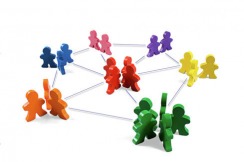
I've been attending many networking events recently and pushing myself to improve in this important business function. I'm naturally a more quiet, shy person, so getting out there and really making strong connections to new people takes a lot of effort and discipline on my behalf.
I've been learning many sides to doing this properly, such as overcoming shyness and proper voice and presentation skills. I've also been reading some of the famous networking books, like Dig Your Well Before You're Thirsty. The information below comes from a variety of sources and my own synthesizing to bring out what matters most to me when I aim to interact effectively with others and how I enjoy others interacting with me.
Curiosity
A lot of my own inertia when it comes to networking is a result of nerves or shyness. I see others talking, and I feel like I shouldn't intrude. A second source of insecurity comes from wondering what to talk about.
A great way to get over both of these points and to be genuinely present in the moment when approaching others is having a strong sense of curiosity -- for the other person, their background, their skills, and any serendipitous connections that can result from your meeting them. You can be curious about where they come from, what difficulties they've overcome, and also how you fit in with their life, such as if you can help them in some way or give them some important advice. I honestly believe that there is something unique, special, and significant about every single human being out there and that every person (and animal) can teach me something useful that I didn't know before. This makes it easy for me to enjoy spending time with people who may not be of any "value" to me now but whom I can simply get to know and learn about and someday perhaps give assist or be assisted by.
By coming from the position of being really interested in meeting and learning as much as you can about all other people around you, it will be much easier to approach them and find topics of conversation.
Note that this is often not the way even gregarious networkers approach the situation. Often people come to meet you who are only interested in learning whether you are "high up" and can somehow help them, or if you have something they need. This frame of mind leads to a much poorer conversation and leaves a much worse taste in the other person's mouth. By coming instead from a frame of mind of curiosity, giving, and reciprocity, you can have a much more enjoyable and effective conversation.
Attention I'm sure everyone has had this happen to them: You meet someone new at a cocktail reception; you ask them about themselves and listen carefully; then they ask you about your background, and as soon you start speaking, they are looking around the room and not hearing a word you're saying. It's extremely frustrating and a waste of time and breath. I've caught myself looking around the room at times and always stop myself when I notice this. At those moments, I ask myself why it is that I'm looking around and whether it's something about my not wanting to talk to this person or my being interested in something else. As soon as I realize that there is a lot to be curious about in the other person, I can quickly snap back and pay attention without interruption from that point on.
The most common reason why I might start paying less attention to someone is if I don't understand a lot about what they're talking about. If someone is talking about something that's interesting to me or about my field or career, I won't have trouble paying attention. Instead of letting my attention wander when it's a subject I don't know much about (or terminology I'm not familiar with), I can use the opportunity to learn about something new and ask questions. There is the fear of looking stupid by asking a dumb question, but I think it's much better to show interest, even if on a basic/naive level about a new field, than to stop paying attention.
Paying attention to someone through active listening, eye contact, repeating what you've understood or heard, not interrupting, and asking intelligent questions afterward is an essential type of respect in all interactions.
Following Up This point can be boiled down to "just do what you promise." It is similar to the points I made about phone calls and emails: when you tell someone you will do something, just do it.
This is especially important when networking. A big part of networking is helping each other, and it's very hard to help someone or feel dependable if you make too many commitments or just forget to follow through. When you meet someone whom you can genuinely help, it's not only your responsibility to offer them assistance but to also see to it that you help them and contact them after the event is through.
As soon as I get someone's business card, if I owe them anything or have any further questions or things to discuss, I note it down on their card (or in my phone). Then, when I get home, I shoot off the necessary emails or set up the right tasks on my to-do list (in addition to adding them to my contact list). With so few people who follow up thoroughly after meetings, you can really set yourself apart by being proactive in this regard and showing people that you care.
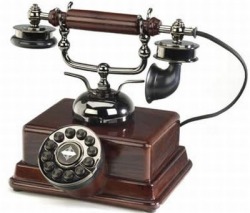
If the phone doesn't ring, it's me. --Jimmy Buffett This post is about phone etiquette, and it should hopefully be shorter and simpler than my previous posts. A lot of the ideas in here seem somewhat obvious, but many people pay little attention to them, and it causes phone communication with them to be slow and painful. In today's world, a lot of communication is happening by phone calls. Emailing and text messaging seem to be replacing more and more phone calls, but there is still nothing that comes close to a phone call in connecting two people emotionally and intellectually who cannot be in the same room (or video conference). By showing respect on the phone, the feeling will go much deeper and will be thus be much more strongly received, purely based on the direct, real-time mechanism of the phone call itself. I've gathered my top five thoughts/tips on phone etiquette below as they are the ones that frustrate me the most when I'm on the receiving end and the tips are not followed. - State your name: At the beginning of a phone call, always slowly and with proper enunciation state your full name (and company, if applicable). The only time this rule can be relaxed is if you are pretty sure the other side has your contact information in their phone book or if the other side is a close friend. Otherwise, you should always repeat your introduction each time you call. There are also often times when people's caller ID systems don't work, and it's better to be safe than sorry. Once the other side jokes that they already recognize your voice, you can be a bit more informal with the intro.
Also, I always like to ask if the other person has a few minutes or seconds to talk at that moment. Sometimes people pick up the phone expecting a short call and are not in a place to be able to talk for a long time. By giving them a quick way out of the call and the chance to reschedule, it'll make their life that much easier.
- Speak more slowly at first: When you first start talking to someone, they need time to mentally adjust to your voice in order to fully understand you. Though you may be in a rush, you can save yourself time in repeating things by starting off speaking more slowly, especially if you think the person you're calling may have general difficulty understanding your language. Just like the first point above, once you've had several conversations and are both adapted to each other's speech, you can proceed to speak more naturally.
Also, in order to further promote clarity of communication, if you have reason to believe your cell phone reception is bad (or you're in a spot that's historically had poor reception), wait to make your calls until you're in a better location. Everyone gets easily annoyed with dropped calls and repetitive call backs when they can't hear you, and though this isn't really your fault, whatever you can do to time your calls appropriately will be a big help.
- Call instead of text or email: So many people get into the habit of always texting or emailing that the idea of calling totally slips their mind (or they're embarrassed to do it). I find that coordinating a meeting or discussing any topic that involves more than 2 back-and-forths is much more efficiently done over the phone. People can usually speak faster than they can type (especially on a cell phone), and you'll be able to deal with a lot of additional issues more easily on the phone than in writing because those will naturally enter the conversation if the mood is right. For example, instead of first coordinating where to see a movie and then coordinating dinner later, you could accomplish both goals with one phone call that will be much faster.
A caveat here is that texting and emailing has the benefit of allowing delayed responses. This is nice if either party needs time to research the answer to something and can respond at their leisure. However, more often than not for simple logistical planning, a phone call can be much more efficient.
Finally, as I mentioned above, a phone call still seems to me to be a much closer, more personal form of contact than texting or emailing. Use this to your advantage and make a good impression on the phone even before you've met the person.
- Return calls quickly and remember what you owe: This is probably the tip that's most close to heart for me. Just like in my post about email, I really dislike having to follow up on phone calls and leave multiple voicemails before I get a call back. If you can't respond in a timely manner, let me know; if you're ignoring me, let me know as well that you don't want to deal with me. But just leaving a conversation hanging seems really unprofessional.
I think the same standard applies to phone calls as emails: same or next day response. Doing phone tag (back and forth voicemails) does not bug me that much, as long as neither side drops the ball when it's their turn to call back. To avoid this, leave a message and state what times you're available to talk over the next few days. That way, the recipient can call you back when you won't be busy.
When you do call back, address all the points or questions that the other side was asking of you (just like in email). If you transcribe your voicemails into notes/to-do list items, you can respond by calling and carefully going through each point to make sure you didn't miss anything.
- Know when to end the call: Finally, be sensitive to the other person's time and mood while on the call. Try to minimize distractions and pay attention to not only the words but the feelings behind what someone is saying. You'll be able to tell by the length of their sentences and their tone of voice whether they're sitting back and open to talking for fifteen minutes or whether they have thirty seconds to tell you something and then they need to run.
Based on that, you can end the call as soon as the necessary communication is complete and either side needs to go. I've been on many calls which seem to drag. We do the necessary hello's and how-are-you's, then we discuss the main topic, and then we seem to wind down. However, at that point, the other side goes back to asking how I am or how something else is going. It's best to not interrupt the flow of things and instead deal with all catch-ups and status updates at the start of a call, the main topic in the middle, and summarize all action items and do good-bye's at the end. Yes, people don't need to be robots and can be more relaxed with this structure on the phone, but when either side is busy, it's best to stick to business and have a fun call later on.
I'm not sure if my word count was lower today, but I hope it was. Please leave me any comments or questions (or feel free to call if it'll be more than one back-and-forth :-) ).
I don't believe in email. I'm an old-fashioned girl. I prefer calling and hanging up. --Sarah Jessica Parker There are lots of articles out there on standard email etiquette. By this point in human civilization's adoption of email technology, most people know the basics: don't use all caps, be careful with reply all, check your spelling, etc. This is pretty obvious stuff, and while there are still many, many perpetrators out there against these basic rules, most professionals have got them down. There are, however, more subtle issues that so many real professionals still get "wrong" that I want to flesh out here. All of the issues below I have personally experienced countless times with medium- and high-level professionals from major organizations around the world. I have also heard so many of my friends and colleagues vent about the same frustrations, so these problems seem pretty universal. Before I go into the actual problems or issues themselves, I will acknowledge that there are obviously reasons why people fall into these traps.Yes, they're extremely busy. Yes, they get 500 emails per day. Yes, messing up or not acknowledging a small part of your email request is not a big deal. However, I would argue that it's better to respond to emails a bit more slowly (while giving notice/setting appropriate expectations) and in a more respectful, professional manner than to answer emails in 10 seconds from a BlackBerry and completely miss a point in a client's request. My grandfather has a Russian expression he loves to use for this type of behavior. It's transliterated as, "Tapi Lapi." I don't know of an equivalent expression in English, but it basically means doing things haphazardly and quickly just to get them out of the way without taking care to do them correctly and thoughtfully. OK, enough background. Here are the main categories of issues and corresponding tips that I want to flesh out. Promptness- Give notice: I spoke a bit about this in my post on punctuality, but a lot of the problem of responding late to email (or arriving late to a meeting) can be assuaged with proper and advance notice and setting the right expectations. If you get tons of email every day or you will be out of town at a conference for a few days, give people a heads up about it so they don't wonder what's taking you so long to respond to their email.
- Provide status updates: Along the lines of the first point, if something is taking longer than you expected, it's a lot better to drop an email saying, "Hey, I'm working on it, but I ran into these issues that delayed me, and it should be done within the next 3 days." I hate following up on people when I ask them a question by email and get no response. I'm sure they're busy or working on it (or maybe they are in fact ignoring my message), but if the other side can just respond and give me an update and ETA, I'll feel a lot happier.
- Check email daily: Checking one's email every single day probably is part of those "universal" email etiquette lists I mentioned before, but I mention it here again. If you're traveling or there's an emergency, yes, you can be excused (for a bit), but it might be easier to set up an auto-responder or reply with a quick note saying something came up and you'll get back to people soon. People generally expect emails to be answered within a day, so this practice will help you do that better.
- Empty your inbox: If you check your email every single day, you should attempt to get your inbox to be empty by the end of the day. This is something I always do naturally but which the GTD method encourages as well. Here's how it works and why it well help you be more prompt with email.
Quick/one minute messages: Messages that are very quick to answer should be answered upon receipt and archived/categorized/put away.
Messages that involve research/thought: These should create tasks on your to-do list that include three important parts: 1) What to research/think about, 2) Who to respond to, and 3) When to respond. The third part is key because it will give you a deadline to respond. Make this deadline reasonably soon, such as in the next day or so. The key is to send some response by that time, no matter what. It can be the final answer, an intermediate answer, or just a status update with a new promised date of next response.
By the way, the to-do list software I use is Toodledo. I used to use Outlook, but Toodledo syncs nicely with my phone, is accessible anywhere, and has all the crazy recurring task features I need.
Also, by emptying your inbox, you will force yourself to really deal with those emails you sort of have been putting off. Examine yourself and your feelings: Why are you avoiding this email? If you can understand that better, you can do a better job in the future with that person or with that type of email.
By managing your own emails with corresponding tasks and due dates for yourself, you won't miss or forget to answer an email, and your psyche will feel clearer and calmer because it won't keep thinking about the long stack of emails that are sitting in your inbox.
Completeness- Answer every point of an email: This happens to me all the time, and I'm sure I'm guilty of doing it unintentionally as well. But when I'm on the receiving end, it's really frustrating.
Here's the situation: You send a polite, organized email asking three important questions. You even put them in a numbered list to emphasize to the recipient that you have multiple questions. The response you receive? A one-line email in all lowercase with an answer to one or maybe two of the points, and that's it. Awesome.
When this happens, just take a deep breath and send them a link to this blog post.
In all seriousness, it's important to respond to every part of someone's multi-question email, even if it's just acknowledging the question and telling them the process by which you'll eventually answer it (if you can't answer it immediately).
I always assume that people fail at this when they are lazy, rushed, or just not being careful. However, I am also aware that some people use this "technique" to not address important points in an email that are somehow sensitive or contentious items, or items where discussing them would reveal some disadvantageous information. For example, let's say someone emailed you and asked you five questions about your new business, one of which was where your office is located. You could draft a nice response answering all the questions except for the office question if you don't want to reveal that your office is not yet set up or in existence. Or you could answer it tangentially by speaking of plans for future offices without describing the current state of affairs.
This technique of not communicating with completeness will avoid the issue in the short term and may tilt the odds of a negotiation in your favor in the present moment, but it is unlikely to go unnoticed by the other side and will create more questions and doubt than just answering honestly in the first place (or maybe just saying that some sub-topic is a sensitive one that you'd prefer to discuss in person or at a later date or something).
- Answer every email: By following some of the tips previously mentioned, your life should get a lot easier with respect to email, and you are much less likely to accidentally miss or forget an email. If you set up to-do items to respond to specific messages or if you group several messages into one response email, you'll be much more likely to be complete in your email communications.
Some people use the "technique" of ignoring entire messages or delaying responding to them when responding doesn't seem to be to their advantage. All of the points made above apply to this case as well; just respond to the message and be honest. That'll be a lot better for your relationship than avoidance. Clarity- Write clearly and unambiguously: A lot of people think that email, because it doesn't involve a leaf of parchment and a quill pen, is a much faster, shorter form of communication that does not need as much care and attention to detail. Yes, email can be more informal and is a lot easier to produce quickly than physical writing, but that doesn't mean you can slack off.
I get many emails every week where I need to clarify various points of people's responses or just email them again to be sure that they meant what they said. Almost always this is unintentional ambiguity. If you can make any effort whatsoever to just choose your words carefully and also repeat the same main points in different ways to be sure the other person can understand, that would make your communication a lot more clear. I'm sure some attorneys would balk at the idea of being redundant because if you happen to contradict yourself in your intended redundancy, then you create even more ambiguity (this happens in many contracts and laws). This is a fine line to walk, but in everyday communications, I think it's better to be a bit more redundant (with care) just to make sure you get your point across.
A great way to be redundant with care is by using examples and numbers. For example, if you're negotiating a volume discount, you can specify how it works formulaically with words but then also include a table or chart (visual representation) and a few example calculations.
- Restate your understanding: This is a common technique in "active listening" but is applicable to email as well. If you receive a message asking you for help with a few items, it can never hurt to respond and state that you will do X,Y, and Z (in your own words and with maybe a bit more detail). This will show the other person that you understand and are paying attention to the details, and it will also give them the chance to correct you or give you more guidance in case you're not 100% right.
By being more prompt, complete, and clear with your emails, you'll show a high level of respect to the people you work with and will deal with your email and resulting work in a much more efficient and effective manner.
Better three hours too soon, than one minute too late. --William Shakespeare Many people like to equate time with money. There is a lot of truth to that notion, such as the time value of money, being able to use one's time to earn money, opportunity costs, and so forth. I think many of these concepts make sense when the issue is between a person and a project, such as an investment decision or a question of how I allocate my time and resources among many different projects. However, when the issue is between two people, I think an additional useful notion is, " Time Is Respect." At the most basic level, what I mean by this phrase is that being punctual and showing consideration for people's time is a form of basic respect. Even small dents in this respect can, over time and many instances, erode a relationship considerably. When two people choose to work together, there are actually three entities involved: the two individuals and the one project. If either person feels disrespected, even slightly, the project is likely to suffer. In addition, it is rare that two people in this world who collaborate or work together will only do so once. In fact, many people hope to build relationships and friendships that can be mutually beneficial over people's entire lifetimes. Therefore, it's likely that the long-term damage to the relationship caused by disrespect will be a lot more harmful than the short-term damage to productivity on the current project at hand. Here's an example: Two professionals meet up to research a new business idea. One of them is late several times by a few minutes, and that slowly becomes the normal course of affairs. While they may not get as much done on their current project as they would like, the person who is always waiting will slowly lose faith in his or her colleague and will be less likely, even if subconsciously, to want to work with that colleague again on other projects in the future. Some people might say, "Who cares? It's just five minutes. Chill-ax." Sure. It is just five minutes. For some ultra-busy professionals, every five minutes counts. For moderately busy people, I think the effect is still important as five minutes at each weekly meeting, for example, can quickly add up to a lot of lost productivity, loneliness, and subconscious dissatisfaction with the other person. I often hear of various groups of people or races or entire countries where the culture is one of lateness. People say things like, "The party started at 7? Oh, he's on ______ Standard Time" (fill in the blank with your own race/background). I think that in certain situations lateness is not that big of a deal, like in some social gatherings where it's explicit that no actual special events will happen for a matter of hours. However, I think it's important for everyone to know this ahead of time and agree. If hosts of parties were more explicit in telling everyone when the party will open versus when important events (like a seated dinner) will actually happen, then more guests are likely to be on time when it matters. Nonetheless, I still think that blaming tardiness on race or culture is just an easy excuse because if there weren't others in that culture or group who were punctual, the entire conversation about why someone was late would never happen. I'll close with some tips and some personal time management practices that help me be on time when it matters and also, as a side benefit, help me be more productive and efficient in getting my own work done. If others have suggestions of what works for them, I'd love to hear them. Tips and Personal Practices- Use a calendar with reminders and recurring appointments: Every recurring appointment goes into my calendar, so I never forget the regular events I have going on. In addition, every meeting I plan with other people goes in there too. I'm talking about 100% of them, no matter how small. Also, put in events that are reminders for you to do something at a certain time of the day, even if it's not a formal, fixed meeting. For example, if you have to cook dinner, put in a reminder at 5pm to cook it if it needs to be ready by 6pm. If you need to call someone who works 3 hours ahead of your timezone, put in an event on your calendar in the morning to call that person.
Every event should have an associated reminder so that it pops up on your phone or computer and reminds you to do it. 90% of the time you already know to do that item, but it is the 10% that you forget on difficult days that will save you.
Use a system that is easy and quick for you to input things so that there are as few psychological barriers to your using the system as possible. (A lot of this advice is from the great book Getting Things Done, but these were my practices even before reading that, so I definitely agree with a lot of the GTD method.)
Every evening, take a look at your calendar for the next day, and in the morning, look at it again to make a mental plan of where you need to go, what keys you need, etc. Make sure all the addresses and phone numbers you might need are inside the notes of the events. This will save you tons of time and headache on the road; it's much faster to look up an address or directions on the computer than on your phone.
Here is the system I use: I used to use Microsoft Outlook, but I switched to Google Calendar because I can edit it anywhere, and it continuously syncs (push) with my phone.
- Don't schedule meetings with people when they are very busy or try to get "squeezed in." When people have very, very busy days, any lateness on either party's side will likely make the meeting very short, extra-stressful, and unproductive. If someone is traveling and back for just a day between two trips, wait until they're done traveling and settled in. Yes, if it's an emergency and very time-critical, you can express that to the other person and let them decide if it makes sense to meet on a busy day or not. Similarly, when you are managing your schedule, try to space out meetings or keep dedicated time to yourself each day to get your work done uninterrupted so that you can be focused on your meetings and on your work when you need to be.
- Over-communicate on tardiness, expected tardiness, and cancellations. If you have the slightest fear of being late, give people a heads up. Tell them you're on your way and there's traffic, and your ETA is 10 minutes. Tell them you're parking and walking over. Usually people will be happier to hear some extra information so they can use the free time to read or make a phone call than be annoyed to get an extra text message from you about your status.
If you need to cancel and reschedule a meeting, do it early and don't do it too much. If you constantly reschedule, it shows the other person that they're probably not a high priority. Mark Suster has an excellent post on meeting cancellations here.
- Treat non-realtime communications media with as much care for punctuality as realtime ones. By non-realtime, I mean email and voicemail. I'll go into those topics more in depth in separate future blog posts, but for now, I'll address how they relate to punctuality.
When people send you a message and ask you for help, they have an idea in mind of how long it will take you to respond. Responding as fast as you can (when it's important) goes without saying, but sometimes you're just not able to respond in the time frame the other person expects. Following some more GTD advice, I like to respond to all inquiries that will take me a minute or two immediately. For all other cases that will take me a bit of time, I like to tell the other person how long I expect it to take me to respond and then follow through with my promise. In my interactions with other professionals, there are so few people who I have seen do this that it shocks me. I hate to constantly follow up, and I would never want to put others in the same situation. Even if you aren't able to meet your promised time frame, just send another message with an updated status.
By communicating openly and honestly about one's status and efforts at completing a project for someone else, you'll be able to get away with taking a bit longer but without the loss of respect that comes with just taking your own sweet time. The key is setting appropriate expectations so that there is as little disconnect as possible between your own plans and what others around you expect.
- Leave earlier than you normally would. If you're a person who is often late, set yourself reminders to get ready and leave 25% earlier than you normally would. Figure out how long it takes you on average to get ready (e.g., one hour from desk to car including showering, dressing, etc.), and add a fifteen minute cushion. By leaving 10-20 minutes earlier than normal, you'll feel calmer and happier while driving without speeding (which will be safer and cheaper in the long run). You'll also get to your destination in time to be punctual and perhaps even to explore and feel more prepared.
Treat meetings with others as if they're a final exam in school or you're giving a speech to a large audience; you would get to those types of things with lots of time to spare, you would plan ahead what you need to bring and how early to leave, and you would force yourself to stop whatever you're doing to start getting ready and to leave on time. By practicing those same habits in other less-extreme situations, they'll become a lot easier and more natural to do always.
I've decided to start a new series of blog posts covering some of my thoughts on different topics of professionalism and etiquette. I'm certainly no expert in this, but it is something that I find myself thinking about and paying a lot of attention to, so I hope that some of my readers can learn something from (or at least find entertainment in) my stories and personal practices. Overall, I think the world would be a much better place if everyone was just a little more professional and respectful to each other. Over the past few years, I've met many people who have given me good (and bad) examples of how to be (and not be) professional. I've also had the pleasure to read many books related to this subject (as well as etiquette in general). I remember a few months in particular during sophomore year at Stanford that were quite formative for me in this regard. Every single day during that period, I would eat lunch with my friends and then proceed alone to the Rare Books Collection in the library. I would don gloves and carefully read the University's only copy of The Courte of Civill Courtesie, a book written in the 16th century about etiquette. Here's its abstract for those who are curious and can decipher it: "Fitly furnished with a pleasant porte of stately phrases and pithie precepts, assembled in the behalfe of all younge gentlemen and others that are desirous to frame their behaviour according to their estates at all times and in all companies, therby to purchase worthy prayse of their inferiours and estimation and credite amonge theyr betters." Through this blog series, my aim is not really to educate or tell others how to behave, as I will forever consider myself a student in this regard. It is simply to vent about some frustrations I have when others are not professional and propose some methods and conventions that I adhere to and which hopefully others can adhere to a little bit more as well. I don't believe any of my thoughts along these lines are unique, but for those of my readers who don't have the time or interest to read 16th century literature or stacks of professionalism and self-help books, I hope I can distill some of the main lessons and strategies I've learned that I believe help me be more respectful and professional with everyone I encounter. Here is a preview of some of the topics I will be covering. If anyone has suggestions or questions, I will be happy to respond to them in the comments. - Punctuality and respect
- Email etiquette and techniques for effective and responsible communication
- Phone etiquette and politeness
- Networking etiquette and respectful curiosity
- Following up and doing what you promise
- Staying up to date and the art of consistency
- Being an expert and amateur at the same time
- Language, grammar, and why it matters
Though the list above might appear dry (I have probably lost more than half of my readers by this point in the post) and completely unimportant compared to the actual content of one's affairs, I hope to demonstrate and explain (with some not-so-dry examples) that the style in which one acts can be just as important, if not more important, in properly communicating and being a respectful and professional person. I leave you with some food for thought: "Manners maketh man." --William of Wykeham (1324 - 1404)
|