Some recent interactions with medical researchers and conferences I've attended have caused me to think about incentives in the field of research, and I'm quite worried.

First, I've realized how extremely finicky and sensitive the scientific process is. Final results can be significantly skewed in the "wrong" direction by variations in equipment, ingredient formulations, specific techniques, and parameters used. Many intermediate ingredients (cells, RNA, etc.) are available off the shelf, which seems convenient, but often has the risk of quite variable quality (I personally saw researchers re-ordering some RNA compound because twice they received something that failed to work as advertised).

The scientific process is complex, difficult, and still so labor-intensive. You would think that in the 21st century the "rote" work would all be outsourced to cheaper labor destinations and/or fully automated with machines, but that's still far from prevalent. Science is still being done in many of the most prominent research universities in a form that's closer to high school chemistry than to 2001: A Space Odyssey.

Secondly, I've frequently heard about "publish or perish" and the extreme focus on publishing positive, statistically significant results. This makes people care more about quantity than quality and on "proving" hypotheses right rather than disproving them or trying new techniques, even if they don't work. There are no rewards for failure, and you can't get a patent for trying. In professional science, as opposed to school, there is unfortunately no "A for effort." And I think we lose a lot of valuable information and create a lot of wasted time by duplicating techniques instead of sharing with each other by publishing things like, "I tried these 5,000 combinations. They didn't work. So if you read this, you might want to try something else."

This results in several complications to the pure pursuit of knowledge and improvement of the human condition. The best publications are peer-reviewed, and the "peers" are the ones competing with the authors for the same publication slots. The one-way anonymity (not double blind) means that people scratch the backs of their friends and form "societies" (which like to meet at conferences) that are really like old boys' clubs for cheering each other on and publishing each other's work.

Also, the focus on publishing creates so much published research that no one can follow it and keep track of it. I'm always shocked when I see scientific citations listing that an article was on pages 1,056-1,064. Who out there is reading thousand-page long journals? I see the same problem with patents: sure, publishing research and filing a patent make the knowledge accessible (when searching for it) but they don't make it prevalent and don't cue anyone to read the findings by themselves.

In addition, because of the drive to publish quantity and show "results" even when they're suspect, it drives the quality of research down, yielding false results. John Ioannidis at Stanford wrote about how too much medicine relies on flawed assumptions, explaining how most published research findings are false. The WSJ wrote several articles explaining how pharmaceutical companies are unable to reproduce most research findings (see above about scientific complexity and sensitivity to specific conditions and compounds).

It's like we're giving people prizes for trying something a thousand times until finally they get lucky enough (or are careful enough) to produce something scientifically significant instead of rewarding them for working hard and producing truthful results (and sharing their experiences either way).

I'm not trying to diss researchers or publications or universities. I know almost all the individuals are honest and extremely hard-working and do believe in the deeper goals of science. I just think the current system is sub-optimal, and I don't know how to fix it. I'm curious to hear what others think.
 
 
One thing I've been thinking about is the various approaches to philanthropy. I wanted to briefly mention the two spheres they fall in and ask what you think.

The most common behavior I keep reading about is something like "deferred philanthropy." It's where an individual is hard-working, profit-seeking, and makes a lot of money in his first sixty years only to later give most of it away to charity. I've heard so many stories of investment bankers who later serve on many charitable foundation boards, give away a ton of money to charity, and even set up their own non-profits or foundations. There's also obviously stories like Buffett's and Gates's (both were first mostly wealth-seeking and later philanthropic).

There's a trend now for younger entrepreneurs (especially those who have accumulated wealth) to commit early on to give most of it away, and I think that falls in the same realm. There are tax incentives to give money to charity, and setting up foundations, allowing people to keep wealth (sort of) in the family (without paying estate taxes); family will be controlling that wealth and can have it pay for various expenses as long as it's generally philanthropically-oriented overall. I see it as a question like, "Do you want to give your money when you die to the government to recirculate in society or to a charitable cause of your own choosing?" Given some individuals' mistrust of the government and annoyance with its corruption and inefficiency, giving to charities (which are also imperfect but maybe less so) seems better.

I've been wondering two things about this trend, and I'm curious what others think. First, if you work so hard to achieve a big goal and grow a big, valuable company and in the end just give most of your money away, what does that say about your incentives and inner goals and desires? Is it just to benefit from the money in the meantime? Is it to feel rewarded on the inside from having achieved and built something great (and the money doesn't really matter)? Or are people actively negotiating and working hard to pull in the maximum wealth possible all in the name of the society to which they'll give their money back (seems unlikely to me)?

Second, it's interesting what this means about the flow of money. Consumers pay money to these big growing companies for their goods and services, then these companies are sold and the founders donate a bunch of wealth (that came from consumers) to charity. So it's like everyday consumers are effectively raising money for charity en masse through companies. This seems like a good thing, but not something that's explicit.

The second model of philanthropy is more like "simultaneous philanthropy" where you're actively "making a difference" philanthropically earlier in life and as you move through your career. This can be in the form of social entrepreneurship (companies that are non-profit or for-profit but which give back at the same time as earning money) as well as simply doing community service, volunteering, CSR, and just giving money to charity now, before you've become very wealthy. There's also the idea of "catalytic philanthropy," or approaching philanthropy from an entrepreneurial standpoint and using business skills to be more effective at change.

This second model seems like a better, more honest model to me, in the same way that "living life now as you eventually want to" seems like a better philosophy than the "deferred life plan" (see also 4-Hour Workweek).

What do you think? Is it right/logical/good to be building up companies and deferring certain things just to give it all away in the end? Is society raising money for charities through for-profit companies that eventually give it away? How "efficient" and non-corrupt are most charities anyways? And is a model of simultaneous philanthropy preferable? I don't have a lot of data or answers and am curious what others think.
 
 
Picture
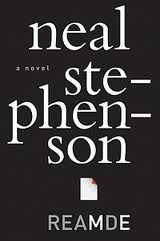
I've been reading Reamde by Neal Stephenson on my Kindle iPhone for the past six months or so (it's a super long book, and I probably read an average of 1 Kindle page per day, like during times when I was waiting for something). Purely based on my reading rate, I could tell that I was enjoying the book much more in the second half when the action really picked up. The last 20% I probably finished in a week.

This book is definitely a lot of fun and chock full of classic Neal Stephenson: weapons, action, computers, hackers, terrorists, etc. It was really cool to see some modern themes incorporated, such as gamification, virtual currency (which is convertible into real money and thus actually supports a real-world economy and real-world full-time jobs), and MMO games. It was interesting to see both Reamde and Daemon be based on these concepts.

The story is about a very random slew of events that weaves together the destinies of physicists, game designers, hackers, terrorists, CIA, and MI5. It got me thinking about whether an MMO game that features convertible virtual currency could really get off the ground (better than Second Life) and support a whole economy of workers. The author's pages-long descriptions of many of the details of the engineering, writing, and design that goes into game production were really interesting as well.

In the end, it was crazy how all the characters' paths came together to achieve the ending (it was a bit too much of a deus ex machina/coincidental ending for my taste). Overall, the book takes dedication to get through, but it's definitely worth it (and educational along the way).


Picture
From psychological, historical, and inspirational standpoints, I thoroughly enjoyed recently reading Man's Search For Meaning by Viktor Frankl. The book is divided into two parts: the author's story of surviving a concentration camp and the resulting foundation for the psychiatric therapy based on hope and meaning the author created (called logotherapy). I enjoyed all the details of the stories, even if much of it has already been displayed in numerous movies and museums (the lessons are still relevant and cannot be emphasized enough). I found that I truly identified with the author's enthusiasm, sense of purpose, and underlying optimism.

Below are my notes on the book, which was a fast, enjoyable, and powerful read. I recommend it for anyone interested in the history of the Holocaust and/or psychology.

Preface
  • Psychology of concentration camp
  • Logotherapy
  • Written by psychiatrist who lost everything in the camps
  • Comparison to Freud
  • Search for purpose in life
  • Why do you not commit suicide day to day?
  • What human does when has nothing further to lose
  • Make larger sense of life
  • Existentialism
  • To live is to suffer (zen
  • To survive is to find meaning in suffering
  • He who has "why" to live can deal with any "how"
  • How to awaken in patient sense of purpose
Preface to 1984 edition
  • Book is best seller means people are really suffering and searching for meaning
  • Wrote book anonymously to start
  • Unintentional best seller
Part 1; Experiences in a concentration camp
  • Auschwitz
  • 3 phases of prisoner: admission shock, adapting to daily routine, liberation
  • Cigarettes as currency
  • Illusion of reprieve: hang on to false hope until last minute
Phase 1:
  • Possessions taken
  • Wash and shave naked
  • Nakedness is what you're left with
  • All identity lost
  • Nothing else to lose except lives leading to humor and curiosity
  • Shave every day to look younger ad fit for work to avoid getting gassed
Phase 2:
  • Next stage of apathy and emotional death and lack of response at horrors
  • Most painful part of beating is insult it implies
  • Frequent selections between workers and dead
  • Apathy necessary self-defense
  • Dreams of bread, cake, and baths
  • 1 bread and 1 soup per day
  • Walking through snow and ice with no socks
  • Deep religious beliefs and small prayer gatherings in secret
  • Love is the ultimate salvation man can aspire to
  • In utter desolation, only through loving contemplation can he survive
  • Find beauty in nature
  • Ad hoc gatherings for art, skits, joking on life and horrors of camp
  • Semblance of art and humor in a camp
  • Humor as salvation
  • Luck, joy relative
  • Man became a number
  • Everything can be taken from man except for his freedom to choose attitude and reaction to surroundings
  • Emotion of suffering is no longer suffering when it becomes an idea you can analyze objectively
  • Man's meaning and destiny and life all unique
  • No one meaning of life
  • Life is just concrete tasks
  • Suffering is unique task
  • Opportunity is way he bears his burden
  • Kindness could be found among guards and SS
  • Two races of men: decent or indecent
  • Not split among racial lines
Phase 3:
  • Could not accept that freedom theirs
  • Lost the ability to feel pleased
  • De-personalization, can't believe dream is true
  • Sudden uplifting of pressure dangerous too, like the bends

Part 2: Logotherapy
  • Focuses on future, not past
  • Reoriented toward meaning of life
  • Logos in Greek = meaning
  • Striving to find meaning, will to meaning (not will to pleasure)
  • Existential vacuum
  • Neuroses from meaning search
3 Ways to find meaning:
  • Work and duty
  • Experiencing something or someone, Love
  • Suffering and our attitude of it
  • Suffering ceases to be suffering when it finds a meaning through change in attitude
  • View life as if from deathbed
  • Super meaning as viewed from higher plane we can't understand
  • Paradoxical attention to what you're most afraid of to fix neuroses/phobias
Postscript
  • Tragic optimism amidst triad of pain, guilt, death
  • How to say yes to life despite that
  • Force optimism


I'm a big fan of Neal Stephenson (he's still my favorite author). Though I didn't enjoy his Baroque series as much as his earlier sci-fi like Cryptonomicon (favorite book) and Diamond Age, I decided to give his newest book (The Mongoliad) a try. (I'm still reading his other new book Reamde in parallel.)

I was a bit surprised that this book had so many co-authors listed, so I'm not sure how much of it Neal actually wrote. I didn't actually enjoy the book very much, and so I'm not sure if this is because it wasn't a lot of Neal's writing or because it was so much a mix of styles and opinions that the overall style got lost (or maybe I just wasn't into the subject matter as much).

After reading it, I discovered the book is sort of an experiment in crowd-sourced writing; check out mongoliad.com to see what I mean. I'm not sure if the community's stories were all incorporated or how that worked exactly, but it does seem like an interesting approach.

The book is about the era after Genghis Khan and features warriors and hunters and many, many vivid descriptions of fighting sequences (a bit too many for my taste -- might be more fun to watch as a movie). It features Mongolian spies, issues of court manners, and shows how women can often be much more sly and smarter than men in battle and in court. The issues of drunkenness, corruption, respect, and honor in battle played big roles in the book. Also, a lot of attention was given to horses, which played an important part in the story (and in history).

If you're into Western Martial Arts, horses, jousting, archery, or Mongolian era history, this book is for you. If you're more sci-fi/tech oriented, I would prioritize Neal's other books ahead of this one.
 
 
When I was a senior at Stanford, I remember going to an inspirational talk by an entrepreneurship professor named Tina Seelig, and the talk was titled What I Wish I Knew When I Was 20. When I was recently strolling through a bookstore in Hong Kong (!), I randomly caught sight of a book by the same name, and it turned out to be a written version of the talk I had heard. Given that it's been 6 or 7 years since I heard the oral version, I figured it wouldn't hurt to have a written refresher, and the book certainly didn't disappoint.

The book is a quick, entertaining account of the lessons Tina learned throughout her life and from her interactions with the many students she has taught and coached. Most recently, she has been teaching a class together with the d.school (Stanford Design School), and I really liked reading the descriptions of the in-class exercises she runs (I wish I could participate in some of those now!). Though some of the advice in the book seems "obvious," hearing it told through real students' stories makes it much more "sticky," vivid, and fun.

Below are my notes on the book. Definitely a fun and inspirational quick read!

Ch. 1: Buy one, get 2 free
  • 2 hours to make money class assignment, present slide in class
  • Turning paper clip into a house
  • Opportunities everywhere around us (every problem is an opportunity)
  • We already have most of the resources we need, can be creative with limited resources
  • Often we frame problems too tightly
Ch. 2: The upside down circus
  • Circus industry in trouble
  • Identify all assumptions and imagine exact opposite of each one
  • Then take what you want from new and old
  • Created Cirque du Soleil
Ch. 3: Bikini or die
  • Tackle big problems and free yourself from expectations
  • Take on impossible tasks
  • Come up with the worst possible ideas to solve a problem and then look at them in new light
  • Break rules
  • Brainstorm
  • Yes And
Ch. 4: Please take out your wallets
  • Don't wait for others to give permission or say you can do something
  • Seize opportunity yourself
  • Look at projects others have abandoned
  • Paying attention
  • Wallet exercise
  • Find holes around you
Ch. 5: Secret sauce of Silicon Valley
  • Write a failure resume, listing failures and learnings
  • When realizing a job is not a match, quit early (same with start-up concept)
Ch. 6: Engineering is for girls
  • People often over guided by others' words and recommendations for career
  • Need to just spend time experimenting yourself
  • Intersection of skills, passion, and market
Ch. 7: Turn lemonade into helicopters
  • Harder you work, luckier you get
  • Act like foreign traveler and be aware of surroundings
  • Lucky people more observant, open minded, friendly, optimistic
  • Every time somewhere new, meet new friend and have opportunity to make a million dollars
  • Recombine ideas in unusual ways
Ch. 8: Paint the target around the arrow
  • Send thank you notes
  • Negotiations everywhere
  • Look for surprises and shared interests
  • Doing the smart thing vs. the right thing
  • Offer to be helpful to others
  • Rule of 3 priorities to not take on too much
  • Apologize with simple sorry
Ch. 9: Will this be on the exam
  • Never miss an opportunity to be fabulous
  • Do instead of try
  • Excuses are cop out
  • Productive better than competitive; coopetition
Ch. 10: Experimental artifacts
  • Give permission to challenge assumptions, forge own path
 
 
I finally got a chance to read The Checklist Manifesto by Atul Gawande and have been talking about it incessantly ever since (along with Daemon). I found it to be a very well written and interesting account of how checklists can save lives and improve quality across a number of fields. It's something so simple it feels stupid, but people are growing so "expert," overworked, and specialized that checklists are more important than ever to assure quality when it matters.

Below are my main notes and takeaways. I highly recommend this book to anyone interested in efficiency, productivity, and public health. I'm particularly interested in ways to apply the book's concepts to many fields (including starting a business) using technology.

Introduction
  • Surgeon author's stories
  • No one remembered one step of a surgery and caused death
  • Great failures and saves throughout his life
  • Human fallibility
  • Err from ignorance or ineptitude
  • Balance recently shifted to ineptitude
  • Legal clerical errors
  • Training isn't the problem
  • Unmanageable amount of know-how
Ch. 1: Problem of extreme complexity
  • More than 13000 diseases/wounds
  • 6000 drugs and 4000 medical procedures 
  • Med = art of managing extreme complexity
  • Hundreds of diagnoses managed each year on average
  • 178 patient actions per day in hospital, errors in 1%
  • Have technology to monitor and control all body functions
  • Line infections very common
  • Super specialization in med
Ch. 2: The checklist
  • Pilot checklist
  • Too much airplane or medicine for one person to fly
  • All or none process: missing one step fatal
  • 4 vital signs
  • Nursing has adopted checklists but not doctors
  • Fixed central line infections at Johns Hopkins
  • Dr. Pronovost Initiative
  • Keystone Initiative
Ch. 3: The end of the master builder
  • 3 types of problems
  • Simple: like baking cake
  • Complicated: like sending rocket to moon
  • Complex: like raising child (uniqueness)
  • Complex have uncertain outcomes not solved by expertise
  • We are besieged by simple problems; checklists help
  • Also by complicated problems
  • When to follow judgment vs. protocol
  • Construction work: complicated
  • Evolved like medicine
  • But medicine still following "master builder" model which construction evolved beyond
  • In medicine, care much less coordinated
  • In construction, no margin for error
  • Huge checklists and schedules of tasks hanging on walls in modern construction site, coordination across 16 trades
  • Daily checks and communications across hundreds of people
  • Can't rely on autonomy to deal with complications or unforeseen problems across 16 trades
  • Rely on submittal schedule, another checklist
  • Communications schedule for who to talk to who about what on which date
  • Makes ppl talk on specific dates
  • Wisdom of group not individuals
  • Man fallible but maybe not men
  • Merge all trades' floor plans to find conflicts in software called ClashDetective
  • Flags issue for submittal schedule and emails relevant parties to talk
  • ProjectCenter software allows anyone on site who spots problem to submit it with digital photo, emails parties, and adds check to schedule for it to be resolved
  • Ppl given 3 days to confirm/approve and all tracked
  • 5 million commercial buildings, 100 million low rise homes, 8 million high rise residences , in US
  • Add 70K commercial and 1M new homes per year
  • Very few errors or full collapses
  • 20 serious building failures per yr (tiny percent)
Ch. 4: The idea
  • Forcing function
  • Hurricane Katrina
  • Communication breakdown and authority power struggle
  • Push power out of the center to the periphery
  • Needs different system than command and control
  • Walmart stepped up and authorized managers to do what was right
  • Efforts to dictate all steps from center fail
  • Judgment enhanced by discipline and procedure
  • Fine restaurant operations
  • Recipes followed exactly and frequently updated
  • Daily check meeting in kitchen
  • Every plate quality checked
Ch. 5: The first try
  • Global surgery volume growing
  • 230 mil per year
  • Higher death rate
  • 2500 different procedures
  • 30% don't get properly timed antibiotic
  • Pre-incision preflight checklist idea
  • Checklist distributes power
  • Anyone can stop procedure if not followed
  • To deal with unexpected, force ppl to communicate at predetermined time
  • Teamwork poor in surgery, unpredictable
  • 1 in 8 don't know why doing procedure or where
  • Checklist requires ppl to give each other their names
  • Reduces nurse turnover and error rate
  • Require 3 pause points in surgery
Ch. 6: Checklist factory
  • Aviation checklists inspiration
  • Normal checklist 3 pages plus 200 pages of checklists for non-normal situations
  • Do-confirm checklist or read-do checklist like recipe
  • Best if 5-9 items like working memory
  • Pilot checklist at 3 points of takeoff including communication
  • Checklist guided by cockpit computer
  • Not meant to be comprehensive just swift help for experts
  • In most fields we don't investigate failures because affects one person
  • In aviation, failures make news and heavily investigated
  • Use flight simulator to test checklist
  • Findings incorporated immediately in new checklists and quickly save lives
  • In medicine, findings take 17 yrs to be incorporated, huge deluge of medical research
Ch. 7: The test
  • For surgery used do confirm format to give flexibility
  • Must disperse authority
  • 3 pause points: before anesthesia, before incision, after surgery
  • Don't need to mark with check marks
  • Had to eliminate a lot of checks to streamline
  • Created safe surgery checklist
  • 19 checks: 7 before anesthesia, 7 before incision, 5 after
  • Did test in 8 international hospitals, very poor and wealthy
  • Measured error rates before and after
  • Checklist involved culture change
  • Start by testing in one OR with senior staff, ppt, YouTube vids
  • 3 month pilot study dropped infections and deaths by half
  • Mix of ops unchanged
  • Hawthorne effect of being observed? No because had been there before started checklist
  • Improved teamwork

Ch. 8: The hero in age of checklist
  • Investors incorporating formal checklists
  • Portfolio managers, value investors
  • Read broadly, look widely
  • When get greedy over good opportunity, need discipline
  • Buffett uses mental checklist
  • Brain works against you to seduce and make you ignore downside
  • Same signals in brain when found profit opportunity as when on cocaine
  • Checklist delivers better financial performance
  • Avoids risks
  • Large resistance against checklists
  • VC investment decisions studied
  • Checklist driven VCs had better performance
  • Feels beneath ppl to use checklist
  • Doesn't match idea of heroism
  • Hudson miracle due to following procedure
Ch. 9: The save
  • Saved his patients many times 
  • Starting a business like construction and medicine
  • How can checklists be used
 
 
I'm a big fan on Brad Feld's balanced and brutally honest blog, and when I heard that he had published a book of startup advice based on the TechStars experience, I knew I would enjoy it. I just didn't know that I would enjoy it this much. 

It's called Do More Faster: TechStars Lessons to Accelerate Your Startup (by David Cohen and Brad Feld), and it now ranks among the top 5 startup books I've read so far. I'm recommending it to everyone along with The Lean Startup and The Startup Owners' Manual.

Below are my main notes and takeaways. I didn't capture every point in the book if I had seen it a lot before, but if you're looking for a great comprehensive overview of many important modern startup issues, this is the book for you. What I particularly liked was reading stories by well-known entrepreneurs from around the world and hearing about how they approached problems in their businesses (and I liked the commentaries by David and Brad as well). It was also neat to hear about how TechStars works and how the combination of mentorship and operational focus helps the companies have a better chance of success.


Foreword
  • By Zynga founder Mark Pincus

Preface
  • Entrepreneurship is very hard
  • TechStars: no fly-by mentorship, community

Theme 1: Idea and vision
  • Not about the idea
  • About testing and pivoting
  • Look for the pain
  • Much more about execution
  • Usage is like oxygen for ideas
  • Don't wait to ship
  • If not embarrassed then shipped too late
  • Real artists ship
  • Focus on smallest problem you can solve better than anyone in world
  • You are stupid; listen to your users
  • Don't have to have any original ideas, just listen to users
Theme 2: People
  • Don't go it alone
  • Avoid cofounder conflict
  • Discuss tough topics up front
  • List of good questions to discuss listed in book
  • Hire those better than you
  • Fire fast
  • 90 day performance review
  • If you can't quit no matter how hard you try, it means you are on the right track; if you can quit, you should
  • Startups seek friends, not sales
  • Close loops with mentor feedback

Great Culture
  • No politics
  • It's not a job, it's a mission
  • Intolerance for mediocrity
  • Watching pennies, make every dollar count
  • Equity-driven
  • Perfect alignment
  • Good communication even in bad times
  • Strong leadership by example, take care of own morale
  • Mutual respect, celebrate wins from each other
  • Customer-obsessed
  • High energy level
  • Fun
  • Integrity
Be open to randomness
  • Random Days: 15 min mtgs with anyone
Theme 3: Execution
  • Concise emails
  • Quick and dirty videos
  • Startups have nothing to lose
  • Can move quickly and not worry about brand
  • Assume that you're wrong
  • Make decisions quickly
  • Advice is just data, you decide
  • Use your head then follow your gu
  • Must measure to manage; doubt all data and see everything as anecdotal
  • Progress = validated learning
Don't suck at email
  • Volume not excuse
  • GTD
  • Inbox to zero
  • Address as branding
  • Respond within 2 days
  • Be concise

7 email rules
  • Use the subject line
  • 3 sentence rule
  • Spell check
  • Reply to important emails right away instead of thinking about it (and can set reminder)
  • Use unread status to mark for later
  • Be conscious of how much you suck
  • Be persistent

Use what's free
  • All free
  • Open source
  • Outsource all that doesn't matter
  • Wordpress
  • Google Apps
  • Skype
  • YouTube
  • Balsamiq
  • Dimdim
  • Dropbox
  • Evernote
  • Gist
  • Github
  • Jing
  • Mongo test
  • PivotalTracker
  • SendGrid
  • Snapabug
  • Twilio
  • Vanilla
Celebrate what matters
  • Only actual progress towards scalable business

Don't hide your failures
  • Learn from them and wear as badge of honor

Quality over quantity
  • Focus on ease of use and graphical look
  • Build one thing well
  • Listen to some not all users
Have a bias towards action
  • Book: My Startup Life
  • Requires self discipline
  • Use external accountability
  • Blame no one, expert nothing, do something
  • Do or do not, there is no try

Theme 4: Product
  • Don't wait until proud of product

Find your white space

Focus on what matters
  • Don't switch plan unless got data that not working
  • Just 2-3 things should be doing
Obsess over metrics
  • Engineering not most important
  • Culture of feedback
  • Acquisition
  • Activation
  • Retention
  • Referral
  • Revenue
  • Avoid distractions
  • Throw things away and pivot

Theme 5: Fundraising
  • You don't have to raise money
  • Angel groups often have fake angels
  • Ask how long angel investing, how many investments, how large each time
  • Ask for intros to last 2 investments this past year or last 3 total
  • Call and ask for founder and confirm that invested and how helped
  • Open Angel Forum

Seed investors care about 3 things
  • People: most important 
  • Products: use product, traction
  • Markets: needs to feel huge; 10-15M in 3-5 yrs and 50-100M in 5-7 yrs without 100% adoption
  • If want money ask for advice
  • Focus on first 1/3 of round and fill it in with lead investors
Show don't tell
  • Brad likes videos and URLs emailed to him of real demos

Theme 6: Legal and structure
  • Form the company early
  • Prefer Delaware S corp
  • Easier to convert to C corp
  • Interview lawyer for cost and vast experience with startups
  • Vesting
  • Always choose qualified lawyer in this space over family or friend
  • Always file 83b election
Theme 7: Work-life balance
  • Spend time away completely unavailable, no connectivity, 1 wk vacation per quarter ("QX vacation")
  • Life dinner monthly: 1st day of month and give nominal or romantic gift, discussing past and upcoming month
  • Segment space: separate work and living space at home
  • Be present and be a person
  • Meditate your own way: marathon, reading, etc.
  • Practice your passion
  • Lunch bike rides and hike meetings
  • Exercise 5-6 days a week
  • Eat fresh food with simple ingredients
  • Sleep
 
 
During my trip to New Orleans for entrepreneur week and the NOLABound program, a fellow participant told me about the book A Confederacy of Dunces by John Kennedy Toole. He said it takes place in New Orleans and features many of the sights and sounds we were experiencing during our trip. When I got home, I started to read this book, and it made my post-NOLA experience that much richer and more vibrant.

I must say though that I thought the New Orleans setting was more enjoyable to me than the rest of the book. I found the writing and plot quite frustrating and at times ridiculous, which I think is the whole point of the genre. It felt like the entire story was a bunch of imbeciles living dysfunctionally. Fortunately, as I got deeper into the book and read some analyses of it online, I got to appreciate the subtlety of the writing even more and some of the lessons and cultural commentary that is underlying much of the apparent surface layer of stupidity.

The book is about a lazy, fat, educated grown man who lives at home with this alcoholic mother and gets into various misadventures with an incompetent policeman and various crooks and criminals around the city. The main character, Ignatius J. Reilly, feels like he was born in the wrong century as his language and mannerisms are better suited to medieval times. The more I got to understand him and the other characters, the more I actually began to empathize and feel their pain. I was really surprised the book was able to do that, and I can see why it won all the awards and praise it has.

I also really enjoyed hearing the various New Orleans accents and slang (they did a great job in the audiobook). For example, I loved how Jones kept saying "Oooh, wee!", "Whoa!", "Hey!", and "Shit!" at the end of almost every single one of his sentences.

Upon completing the book, I realized that all the characters see the world differently and think the others are crazy and that they are normal. For the "objective" reader, all the characters seem disturbed and dysfunctional in their own way but at the same time lovable, pitiable, and understandable. I liked how the plot made all the characters' paths cross and affect each other. The societal issues of racial conflict, vagrancy, African American rights, wages, and modern degeneracy all rang through in the subtext of the story.

Some of the other issues or problems explored in the book:
  • Reilly like an Aquinas/Don Quixote in New Orleans
  • Comedy/commedia
  • Farting
  • Also sad at some level
  • Tragedy of book and author (suicide)
  • New Orleans accent like port town, Mediterranean, New Jersey
  • Corrupt police
  • Racism
  • Lazy anachronistic mean Ignatius
  • Weird relationship with mom (Oedipus issues?)
  • Single mom troubles
  • Alcoholism
  • Poor employment opportunities
  • Laziness at work
  • Attitudes towards business ownership
  • Wife/husband manipulation
  • Obsession with "my valve"
In the end, the "crazy" main character leads all others to do constructive things with their life and brings the story's crisis to a fair denouement. In the end, it is the "crazy" man who saves the world. This is why the book truly merits its title, as it was named after the epigraph by Jonathan Swift: "When a true genius appears in the world, you may know him by this sign, that the dunces are all in confederacy against him." (Ignatius is hated throughout the book by everyone, including the reader, but in the end, it is he who accidentally saves the day.)

For anyone who wants to learn about New Orleans or wants the challenge of a troubling story to unravel, this book is a great read.
 
 
Learnings from Circadian Rhythm Conference

In April, I got the chance to accompany my wife to a conference on circadian rhythm and metabolic disease (she was presenting a groundbreaking poster on the role of circadian rhythm genes in sebocyte skin cells). The Chancellor of UCLA has a lab studying circadian rhythm science, and I got the chance to hear him speak about his research. The conference took place at the Bruin Woods retreat center in Lake Arrowhead, which was a beautiful location that featured many cool outdoors-y activities like hiking, kayaking, archery, rock climbing, etc. (too bad it wasn't summer time!), and the food was really good too.

While most of the talks were highly technical, I was able to follow some of them and learned a lot about the importance of the circadian rhythm in affecting practically all biological functions. On the flip side, I learned how irregularities in one's rhythm can disrupt and cause many common diseases, especially diabetes (irregular rhythm is stronger indicator of diabetes than weight/BMI!). What that means for you: go to sleep on time to stay healthy!

From an "eastern medicine" standpoint, these findings make sense, as the circadian rhythm is what allows us humans to stay in sync with nature around us. And I can see how in our 24/7, work-a-holic, always-online world, circadian rhythms and "synchronization with nature" can get more easily disrupted.

Below are some of the main lessons I took away from the conference sessions. Here's a recent WSJ article on the topic as well.
  • Circadian rhythm regulated by SCN part of brain (across 2 hemispheres)
  • 80,000 neurons stay in sync!
  • VIP synchronizes, GABA desynchronizes
  • Circadian rhythm expressed in most major organs (pancreas, liver, skin)
  • Light from eye comes in and gives signal to brain
  • Experiments use rat models, fat mice, skinny mice, mice with clock genes knocked out (poor mice!)
  • Measure mouse activity by "wheel running" (funny concept; I tried to ask why mice like to run on the wheel but couldn't get a clear answer)
  • Clock genes expressed in cells
  • Bladder shrinks during the day and grows at night to enable comfortable sleep (cool!)
  • Shift workers have higher risk of cancer (!!)
  • Melatonin is protective of cancer (and bad circadian rhythm messes up melatonin)
  • Messed up circadian rhythm leads to diseases (diabetes, hypertension, metabolic syndrome)
  • Messed up circadian rhythm is a stronger indicator of diabetes than BMI (!!)
  • High fructose corn syrup (like in soda) lowers mental function in mice
  • Bad circadian rhythm + bad diet increases hypertension risk
  • Circadian rhythm disturbance leads to metabolic disorders because of dyssynchrony between what body programmed to do and what body does (not in harmony with nature)
  • Exercise at specific times on a daily basis can fix a broken circadian rhythm (used timed wheel access for mice)
  • Circadian disorders affect memory and learned behavior
  • Aging clock: reduction in wheel running amplitude in old mice
  • Old adjust more slowly to new light schedules
  • Phase advance forward increases mortality for old animals (eastward travel) but phase delay back doesn't (if you're old, try not to fly east!)
  • Cool concept: "social jet lag" (going to sleep late Friday and Saturday is like flying west and then waking up early Monday is like flying east)