
Max Mednik

  • Home
  • Résumé
  • Interests
    • DJing and Music
      • Reading
        • Photography and Film
          • Psychology and Self-Improvement
            • Spirituality
              • Travel
                • Sports
                  • Romance and Weddings
                    • Magic
                      • Community Service
                        • Scuba Diving
                          • Theatrical Lighting Design
                            • Cirque du Soleil
                            • Contact
                            • Search
                            Austin Beutner and Mayor Riordan on Public Service 05/30/2011
                            2 Comments
                             
                            Picture
                            Austin Beutner, a well-known politician and arts philanthropist, spoke to our leadership and ethics class a couple weeks ago. The talk gave me an interesting perspective on how it's possible to turn around city government organizations and be entrepreneurial in the context of public service.

                            Beutner started his talk with his background and family information. His dad was a mechanical engineer, and Austin was taught from a young age to be serious about college and work while he was growing up. He remembers constantly washing dishes, cleaning printing presses, and driving delivery trucks for a florist.

                            He went to college at Dartmouth and moved to Wall Street in 1982. He was part of the Blackstone Group before beginning his work in government with the State department. He remembers visiting the mayor of St. Petersburg and learning that in the Soviet system, "profiting" literally meant taking advantage of someone. This was in large contrast to his own understanding of the concept, and he realized how likely miscommunication can be with different languages and social idioms at play. This also taught him the importance of always trying to listen.

                            After this experience, he started own firm that operated in various areas of finance. He did this until he got into a bad biking accident and decide to change careers. That's what got him to stay in the LA City public office. He felt passionate about changing the culture of how people worked in City Hall. He felt that all City employees should be public servants; the city's citizens should be their customers. (Instead, it's usually about enforcing and writing rules.)

                            He had three major initiatives while in office. First, he wanted to "do more with less bureaucracy." One example of this was "12 to 2": reducing the number of City departments one had to interact with to get a permit from 12 to 2.

                            His second initiative was learning from others (both for himself and for all his employees). All his employees had to do 5 cold calls per week to customers of the city (private sector employers). He personally talked to auto dealers, who are the #1 payer of sales tax and among the top 5 in aggregate payroll. They told him that they were having trouble finding entry level talent, and so he brought them together with community college leaders and started a dialogue about matching the two together.

                            His third initiative was reducing bureaucracy. He had the idea for a business tax holiday: a temporary pause on business tax to bring businesses back to LA. He called up some business school heads and professors to write papers and went on to announce the business tax holiday with Schwarzenegger thereafter. In addition, he worked to create local preferences for using LA vendors for the City.

                            The talk was interesting, and it was exciting to hear him tell us that he'll be running for mayor of LA.
                            2 Comments
                             
                            Notes on Brand Relevance by David Aaker 05/28/2011
                            0 Comments
                             
                            Picture

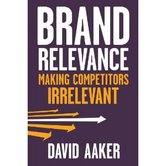
                            I recently heard an audio summary for Brand Relevance by David Aaker, a Haas marketing professor. The focus of the book was the distinction between brand relevance and brand preference. The key is that by differentiating from other brands and making yours the only relevant one, preference does not matter anymore (you have your own category).

                            The four steps to achieving this according to the book are the following:
                            1. Generate new concepts (for brands)
                            2. Evaluate them
                            3. Create barriers to entry
                            4. Manage the brand
                            (The book was interesting, but these seemed too simplistic.)

                            Brand Preference vs. Brand Relevance Models

                            • Brand preference is about cheaper, faster, and better.
                            • Brand relevance is about creating new categories where there is no competition.
                            • Competitor set minimal
                            • Definition of category with clear differentiation
                            • Value proposition that changes the relationship
                            • Loyal customer base which is economically viable
                            • Natural barriers to competitors
                            • Disruptive innovation
                            Concept creation
                            • Discover unmet need
                            • Can be obvious but with technical hurdles
                            • Can be dormant with investment that seems too high
                            • Can also be a non-obvious need
                            • Ask customers
                            • Suggestion box
                            • Brainstorm
                            • Follow market trends
                            Evaluation
                            • Is there a market?
                            • Can we compete?
                            • Can it endure?
                            Final Steps: Create Barriers to Entry. Define and manage the category.
                            Add Comment
                             
                            Notes on Eli Broad Talk in Leadership Class 05/26/2011
                            0 Comments
                             
                            Picture
                            Eli Broad gave a talk in Mayor Riordan's Leadership class that I'm taking this quarter. It was a nice opportunity to hear him speak about his businesses and his philanthropic efforts.

                            He told us he was born in NYC, and his parents moved to Detroit when he was 6 from Lithuania. He became a CPA when he was 20. Later he founded Kauffman Broad and KB Homes. He met Kauffman who was married to his wife's cousin, and their first key strategy was building homes without basements. Kauffman was the builder and carpenter, and Broad was in the office. They got along well, and he told us he made lots of mistakes.

                            Traits of good CEO according to him: Leading by example, never asking others to do something you're not willing to do yourself.

                            When KB went public, it had a market cap of $1 billion (in the 1970s). He was able to convince Wall Street that their business was not cyclical.

                            Broad decided to buy insurance companies, which were the only ones to survive the Great Depression. He found insurance boring but discovered a niche in retirement savings, and converted his company to do this. This was a step on his journey that brought him to buy SunAmerica for $68 million, which he later sold for $18 billion.

                            A quote Broad gave us was, "The reasonable man adapts himself to those around him. The unreasonable man adapts the surroundings to himself. All progress depends on the unreasonable man." This is a key quote for entrepreneurs to keep in mind as being unreasonable is the only way to get out of the status quo.

                            He told us how he got a JD degree and has found himself to be able to take on many projects and do great in all of them. Right now, his main efforts include philanthropy in education reform, scientific and medical research, and the arts.
                            Add Comment
                             
                            Notes on Influencer by Kerry Patterson 05/24/2011
                            0 Comments
                             
                            Picture
                            I recently listened to a summary of Influencer by Kerry Patterson. The book was alright, and I'm not sure if it was the summary or the book, but the content didn't seem as unique as I would have hoped (a lot of the same material as in other psychology/influence books I've read). That's not to say it wasn't a good introductory/summary book for the topic.

                            The book started with the two most basic questions people ask: Am I able? and Am I motivated? The book's goal was to demonstrate six steps to influencing people's attitudes towards those two questions.

                            1. Make the undesirable desirable
                            • Create new experiences and new motives.
                            • Create a game: use the concepts of challenge and frequent feedback.
                            • Connect to person's identity: Apple iPod.
                            2. Surpass your limits
                            • Deliberate practice
                            • Feedback and a clear standard/goal
                            • Mini goals along the way
                            • Prepare for setbacks.
                            3. Harness peer pressure
                            • Go after early adopters, not innovators (who are shunned by others as outsiders).
                            • Get the socially-connected and respected opinion leaders to get behind your product.
                            • Find who is most admired and connected; ask around for people like this.
                            4. Find strength in numbers
                            • NQ = network quotient (quality and quantity of connections a person has)
                            • Get immediate feedback from coaches
                            5. Design rewards and demand accountability
                            • First go for intrinsic satisfaction, then social support, then extrinsic rewards.
                            • Extrinsic rewards can backfire sometimes.
                            • Award ceremonies: both winners and losers don't like them.
                            • Individual rewards can kill teamwork.
                            6. Change the environment
                            • Make the invisible visible.
                            • Add cues in your environment to promote the right behavior.
                            • Put people physically close for collaboration.
                            Add Comment
                             
                            Michael Phelps on Philosophy 05/22/2011
                            0 Comments
                             
                            Picture
                            UCLA Today
                            In the Leadership and Ethics class I'm taking with former Mayor Riordan, we had an interesting speaker a few weeks ago: Michael Phelps. It was the one on the right of the photo above, not the swimmer on the left. The one on the right, it turns out, is equally interesting (and athletic).

                            Michael Phelps is the inventor of the technology behind the PET scan, which he later sold to Siemens. He's now a professor at UCLA.

                            Phelps is Irish, and he began his story with an Irish saying: "When you lose something, you gain something." He taught that life is not about the plans you make but the people you meet. When his parents died, he began to live with a new family that introduced him to boxing. He was a boxer for 10 years and then went into a coma from a car accident. This made him switch away from boxing and go back to school.

                            Another one of his sayings was, "fake it 'til you make it." He had no background in math, but he studied math and chemistry and ended up getting a Ph. D. in chemistry. He then went on to join the faculty in the medical school at Wash U  and now UCLA.

                            He started a company with two others that went on to create the PET scan. He developed PET while at Wash U, but the university claims no rights on inventions. (He said UCLA doesn't help as much and does take rights.)
                            PET works by emitting a positron that combines with an electron to annihilate mass and emit energy (2 photons). A camera collects 40 million such events and makes an image from thousands of slices. Positrons are massless, so there is no pharmacological impact, and the scan is safe.

                            Some other philosophical points he made:
                            • If you do things for money, anyone can beat you. If you do things for passion, you're unstoppable.
                            • If it is to be, you must believe. If it is to be, it's up to me.
                            • In the boxing ring, it's just you alone.
                            • "Life has a natural curve. Only way to change this is to continually be starting new curves and remain in a state of becoming." -Norton Simon
                            • "All the world is about training and fighting. Training = becoming. Fighting = delivering and standing." -Ira Goldberg, his boxing coach
                            • "The world doesn't belong to the brilliant critic but to one who stumbles and gets up and keeps going." -Ted Roosevelt
                            Add Comment
                             
                            Notes on Onward by Howard Schultz 05/20/2011
                            0 Comments
                             
                            Picture
                            I don't drink coffee, but I thoroughly enjoyed Onward by Howard Schultz, the story of Starbucks and its long, complex history (I like hot chocolate and tea). The audiobook I listened to was quite long,, and at times it felt more like Starbucks marketing than actual story and analysis. However, for the most part, I enjoyed hearing about the challenges the Starbucks CEO faced and how he and the right people around him helped turn around the business that we all know and love. I also grew to have a much deeper appreciation for the process around growing and roasting coffee, the training and culture behind the baristas and Italian coffee shops, and why "going out for coffee," something so commonplace now, is actually quite special and worthy of analysis.

                            The author/CEO starts the story with his own background. He grew up in New York in the "projects" and started in the marketing department for Starbucks, a company that just sold coffee beans at the time. He went on a formative trip to Italy, where he felt the intense cultural love for espresso bars and the community created in the neighborhoods through coffee. The coffee shop has become the "third place" in one's life (with home and work being the other two).

                            He took this idea back to the US and started his own coffee shop. In the process, he bought his former employer Starbucks and grew it to what it is today.

                            Some key points that I found interesting in the introduction is how they treated employees and managed their team. Starbucks gives all employees (including part-time) equity options and health insurance. They also lowercase all titles and call employees "partners."

                            The book focuses its attention on the problems in the US economy, their effect on Starbucks, and how Schultz came back to be a second-time CEO to deal with problems and turn the company around.

                            Part 1: Love

                            Ch. 1: A Beverage of Truth
                            • One day, Starbucks closed all its stores to retrain all its employees at once to pour better shots of espresso. The CEO sent DVDs and DVD players to all stores to communicate with all employees directly and train them in the right procedure.
                            • This took major courage and lost a lot of profit.
                            • Main values baristas should promote: love, human relationships
                            Ch. 2: A Love Story
                            • Entrepreneurs must love what they do because there is immense pain.
                            • Wrote frequent memos to employees
                            • Trip to Italy, coffee bar experience, immense sense of community around coffee
                            • Starbucks at the time didn't want to sell beverages, just beans.
                            • So he left and started his own coffee bar, Il Giornale.
                            • Bought Starbucks from its owners
                            • Gave options to part-time employees
                            Ch. 3: Surfacing
                            • After Starbucks established itself, he switched from CEO to focusing on international Starbucks openings.
                            • Social responsibility
                            • Expanded to music, books, films
                            • Hubris, problems with the next CEO's decisions
                            • Mentality focused too much on growth
                            • Deterioration of customer experience
                            • Dilution of experience
                            • No blame; all were responsible.
                            • Missing aura, spirit
                            • Efficient espresso machines too tall, stops eye contact and engagement with customers
                            • Automatic espresso machines are efficient but remove the sense of theater.
                            • Aroma lost due to shipping method
                            • Wrote memo of all these issues
                            Ch. 4: Nothing is Confidential
                            • Memo got leaked, lost trust in team
                            • Realized they need social media presence to respond to new technology
                            Ch. 5: Magic
                            • Burnt breakfast sandwiches killed the coffee smell, even though good for sales
                            • Had to change this
                            Ch. 6: Loyalty
                            • Never intended to return as CEO but couldn't stand by while quality worsened
                            • Company focused more on Wall Street and growth than initial inspiration
                            • Kekst and Company (consultancy) helped with secret management crisis
                            Part 2: Confidence

                            Ch. 8: A Reservoir of Trust
                            • Nice story of change in control
                            • Long past of good work
                            Ch. 9: A New Way to See
                            • SYPartners organized brainstorming retreat.
                            • Studied other icons like the Beatles
                            • Sacrifice short term
                            • Call employees partners, lowercase titles
                            • Training day: closing all stores on one day
                            • Visited other merchants for inspiration
                            • Focus on coffee quality
                            Ch. 10: Playing to Win
                            • Developed lighter and more balanced blend (Pike Place Roast)
                            • Experimented with new methods to serve coffee customers asked for
                            Ch. 11: Elevating the Core
                            • Comps: Same store sales compared to previous year
                            • Eliminated public disclosure of comps to avoid short term focus
                            • Acquired Clover brewer startup to increase coffee quality
                            • His speeches were impromptu, based on love of Starbucks and coffee.
                            Ch. 12: Get in the Mud
                            • World belongs to the few who get their hands dirty.
                            • Asked people to email him directly
                            • Open forums for all to ask questions
                            • Compose frequent memos to employees
                            Ch. 13: Reason to Exist
                            • Written Transformation Agenda
                            • Focus on sense of community, human connections, moments
                            • Online social networks, CRM, forum to connect to community and get ideas
                            Part 3: Pain

                            Ch. 17: Whirlwind
                            • Hired Edelman PR agency for Pike Place Roast launch
                            Ch. 18: A Lethal Weapon
                            • Bad information technology in stores
                            • Closed 600 stores that were not sustainable
                            • Rising costs and sinking sales
                            • Targeted $2 sales per $1 dollar invested
                            • Added stores previously to reduce wait times but cannibalized business from nearby locations
                            • Success is not sustainable if only defined by growth and number of stores.
                            • Only number that matters is One: One cup, One customer, One partner.
                            Ch. 20: No Silver Bullets
                            • Sorbetto
                            • Vivano
                            • Loyalty program
                            • Multiple promotions at once cannibalized
                            • Large investment in Sorbetto equipment, bad currency rate, huge freight costs, huge cleaning costs, low margin
                            • Barista buy-in required for success
                            • Abandoned Sorbetto to cut losses
                            • Thirst for innovation blinded him
                            Ch. 21: I Know This to be True
                            • Said he's sorry and held big conference when laid off a lot of non-store employees
                            • Let people manage their own exits
                            • Set up free new email accounts for laid off workers
                            • Gave employee assistance packages
                            • Severance pay to all
                            • Allowed everyone to voice comments to him
                            • Surrounded himself with strong talent, pulling others out
                            • "Onward" is the sense of the dual nature of transformation.
                            • Honor past and reinvent future
                            Part 4: Hope

                            Ch. 22: Truth in Crisis
                            • Lehman bankruptcy
                            • Huge supply chain problems at Starbucks
                            Ch. 23: A Galvanizing Moment
                            • Went to New Orleans for big annual conference
                            • Touch Worldwide design firm made conference displays interactive with the help of SYPartners
                            • Introduced product RED
                            • Partnership with Bono
                            • Commerce and compassion
                            • New laptops and POS system
                            Ch. 24: Nimble
                            • BBDO ad agency
                            • Free coffee on election day, TV ad during SNL, and Facebook campaign
                            Ch. 25: Plan B
                            • Board of Directors made them push more to cut operating costs.
                            • Listed names of directors, backgrounds, and his friends. Every individual unique and pivotal to success.
                            Ch. 26: Stay the Course
                            • Loyalty card
                            Part 6: Courage

                            Ch. 27: Innovate
                            • Instant coffee invented by Sacramento medical scientist
                            • Intense R&D effort
                            Ch. 28: Conviction
                            • Lots of naysayers for instant but he believed in it
                            • Naming was difficult
                            • Came up with VIA
                            • Outside design firm created packaging
                            • Leaked news before release, bad initial blog reviews but over time taste tests proved it to be superior
                            • Reinvented category
                            Ch. 29: Connecting Dots
                            • Considered partnership with Blizzard Entertainment
                            • Didn't do it because it was far from their values
                            • Private digital content for in-store users
                            Ch. 30: Balance
                            • Met with merchant in Italy
                            • Merchant said he cannot have even two coffee stores (and maintain quality).
                            • Being a "merchant" = desire to tell a story
                            • Balance efficiency with romance
                            • Starbucks: 16,000 stores, 40 years
                            • Focused now more on interior design, sustainable construction
                            • Original designs per store, more independent mercantile feel for research and experimentation
                            • Lean operations
                            • Managers acting as owners and entrepreneurs, empowered to experiment in their stores
                            Ch. 31: Conscience
                            • Rwanda trip
                            • Farmer loans and support, fair pay
                            • Donated cows to farmers
                            • Health coverage for all part-time employees
                            Ch. 32: Winning
                            • Earnings began to grow again.
                            • Increased salaries by merit, continued to match 401k contributions throughout bad times
                            Ch. 33: China
                            • Trip to Shenzhen
                            • Innovation using local ingredients
                            • Instilling confidence in others
                            Tribute
                            • Created tribute blend for 40 year anniversary
                            • Loyalty
                            • Social media
                            • Lean
                            • International
                            • Mercantile experimental shops
                            • Sustainable agriculture
                            • Improved operations supply chain
                            • Store technology
                            Add Comment
                             
                            Guys and Dogs Solve Awkwardness 05/18/2011
                            0 Comments
                             
                            Picture
                            The Good, Bad, and Ugly
                            Here's the scenario. You're at dinner with both your family and your significant other's family. The awkwardness that results needs no explanation.

                            How does the awkwardness go away? From my experience, there are often two main solutions: guys and dogs.

                            By "guys," I mean the most common link between the two families. (This example can be extended to include two social groups that share some common members but do not often mix.) There is this pressure that guys (if they're the most "common" member of the two social circles) feel to help break the ice. Often times, girls play this role much more naturally. Everyone often looks to whoever it is organizing the event or joint outing for social cues as to what to do with the awkwardness.

                            And the best way to dispel it is through humor. That's where dogs come in. Having a dog around immediately (for better or worse) shifts the focus of attention away from the social interaction and onto the cuteness or hilarity of the animal. Everyone likes to pet it, ask questions about it, tell stories about its escapades, and that dispels awkwardness and also creates bonding (as the two social circles learn more about each other through their common experiences around dogs). Maybe cats and all pets help serve this function too.

                            But humor and cuteness need not be solely from dogs. Often funny hats and weird clothes can serve the same function.

                            I wonder if other guys (or pet owners) out there have felt the same way and what techniques others use to help their guests feel at home. When it's my job, I know that I feel responsible to do this as the guy, and my dog always comes to the rescue to help.
                            Add Comment
                             
                            Steve Soboroff's Success Acrostic 05/16/2011
                            0 Comments
                             
                            Picture
                            LA Times
                            Steve Soboroff recently spoke at my leadership and ethics class led by Mayor Riordan, and it was a fun, very personal discussion. Steve is a successful real estate developer and has worked as a land broker for many large shopping center deals. He was also pivotal to bringing Staples Center to LA.

                            His talk centered on an acrostic about the characteristics of leaders and effective people:
                            • Ask questions
                            • Balanced lives
                            • Control (take charge)
                            • Don't be intimidated
                            • Encourage others
                            • Flexible
                            • Goals
                            • Honest
                            • Intense
                            • Juggle
                            • Know your strengths and weaknesses
                            • Lucky 
                            • Meet with people in person
                            • Niche
                            • Orchestrate
                            • Psychology (understand it)
                            • Quality people (surround yourself with them)
                            • Risks (take them)
                            • Seminars (listen to them)
                            • Tools
                            • Use professionals (high-quality vendors)
                            • Vacation (take time every single day to process and think)
                            • Win (like to do it)
                            • Xerox (copy and emulate others)
                            • Yes
                            • Zero vacancy
                            Add Comment
                             
                            Notes on The Art of the Start by Guy Kawasaki 05/14/2011
                            0 Comments
                             
                            Picture
                            One of the most fun and comprehensive books I've read recently is Guy Kawasaki's classic The Art of the Start.

                            It was a really fun read and covered all the basics of entrepreneurship I had learned about before but gave them a very succinct, clear structure. It also went through pretty much all the important questions an entrepreneur needs to consider, and I can see how it can serve as a helpful guidebook for preparing business plans, pitches, and actually starting a company.

                            The book starts with a general introduction speaking about economic cycles. It does this through two metaphors: telescopes and microscopes. When things are going great, everyone looks very far into the future (with an all-seeing telescope) and has high hopes. When things aren't going so great, everyone looks very closely at every minute detail and cost (with a microscope). Entrepreneurs need to be able to do both in appropriate measure.

                            Ch. 1: Starting
                            1. Make meaning.
                            2. Make mantra.
                            3. Get going. Polarize people to love or hate your product.
                            4. Define your business model.
                            5. Weave a MAT: Milestones, Assumptions, and Tasks. This is your action plan to keep you going.

                            Ch. 2: Positioning
                            • Niche, not broad appeal
                            • Pick a good name.
                            • Make your value proposition personal.
                            Ch. 3: Pitching
                            • 10/20/30 rule: 10 slides, 20 minutes, 30 point font
                            • Good information is listed in the book on the exact slides necessary for investor, sales, and partner pitches
                            • General slide organization: 1) Title/contact info. Say clearly what you do. 2) Problem. 3) Solution. 4) Business model. 5) Underlying magic. 6) Demo. 7) Marketing and sales. 8) Competition. 9) Team. 10) Ask, financials, current status, accomplishments, use of funding.
                            • Ask at the beginning, "how much time may I have?"
                            • Let one person do the talking.
                            • Ignore market consulting studies.
                            • Use a dark background.
                            • Put your logo on master slide.
                            • Use common sans serif fonts.
                            • No animations
                            Ch. 4: The Art of Business Plans
                            • Limited use
                            • MAT is better
                            • The planning is better than the plan.
                            • Do your pitch before writing your plan in order to get feedback.
                            • Focus on the executive summary.
                            • People judge a plan on the exec summary.
                            • 20 pages length
                            • Simplify the financials.
                            Ch. 5: The Art of Bootstrapping
                            • Low upfront capital requirements
                            • Short sales cycle
                            • Manage for cash flow
                            • Bottom up models
                            • Ship, then test
                            Ch. 6: The Art of Recruiting
                            • Check references early.
                            • Ask structured questions.
                            • Past experience less important
                            • 90 day joint review of hires
                            Ch. 7: The Art of Raising Capital
                            • Get an intro.
                            • Get sales, contacts
                            • Competition listing: Company, what they do and we don't, what we do and they don't
                            • Send reports to board in advance.
                            • Never surprise a board.
                            • Ventureone.com
                            • Venturewire.com
                            • Ask for 25% higher price if given term sheet
                            Ch. 8: The Art of Partnering
                            • Define deliverables and objectives.
                            • Follow up with people after mtg.
                            • Do things for others.
                            Ch. 9: The Art of Branding
                            • 4 Ps: price, product, place, promotion
                            • Contagious product: cool, effective, distinctive, disruptive, emotive, deep, indulgent
                            • Intuitive interface
                            • Write a manual (which serves as marketing) with a good index.
                            • Ask your parents to test.
                            • Give evangelists stuff to promote.
                            • Give goodies out like t-shirts.
                            • Create a brand with emotion; target the young.
                            • Build community.
                            • Feature your customers in promotional materials.
                            • First generate buzz; then press will write about it.
                            • Help reporters at lesser known publications, and they will help you later.
                            • Good speeches: tell stories, self deprecate, tell stories about kids, use a top 10 list format, look at audience, not the moderator.
                            • Designing t-shirts: no white, minimize text, use big/60pt font, spend money on design, make in kid size.
                            • Do not pay evangelists for their help. Honor publicly.
                            Ch. 10: The Art of Rainmaking
                            • Get version 1.0 to market to see where it blossoms.
                            • Be open to unintended uses and customers.
                            • Pick right lead gen method.
                            • Small scale seminars
                            • Give speeches.
                            • Get published.
                            • Networking
                            • Trade organizations
                            • Find key influencers; ignore titles.
                            • Suck down, talk to secretaries, empathize, give help, send articles, never complain or go over their heads.
                            • Go after agnostics, not atheists.
                            • Land the prestigious reference account.
                            • Ask prospects what they need.
                            • Enable test drives.
                            Ch. 11: The Art of Being a Mensch
                            • A mensch is a person who is ethical and admirable.
                            • Help many people.
                            • Do what's right.
                            • Pay back society.

                            Add Comment
                             
                            What is Nostalgia 05/12/2011
                            0 Comments
                             
                            Picture
                            "True nostalgia is an ephemeral composition of disjointed memories."  --Florence King

                            "Nostalgia is a seductive liar."  --George Wildman Ball

                            "Things ain't what they used to be and probably never was." --Will Rogers

                            "I don't like nostalgia unless it's mine."  --Lou Reed

                            "Nostalgia for what we have lost is more bearable than nostalgia for what we have never had." --Mignon McLaughlin

                            "A feeling of sadness and longing that is not akin to pain, and resembles sorrow only as the mist resembles the rain." --Henry Wadsworth Longfellow

                            I recently went back to Stanford for the west coast business school Challenge 4 Charity Weekend. It was my first time back on campus for more than a couple of hours, and the nostalgia hit me really hard. It was incredible how many things I felt at once. It got me thinking about what nostalgia really means, why it exists, and whether others experience it the same way. Here's just a sample of the many thoughts that ran through my mind that weekend:

                            Wow, I remember that corner! And my bike! And getting lunch here! That was so pleasant.

                            Wow, I feel old. I feel out of place. Why am I here?

                            I want to be here. I like it here. Can I stay? Can I go back (in time, in space)? Where do I belong?

                            Where are my friends? Where is everyone who was here when I was? What if I could bring them all back now? Would I?

                            This place is the same, but I'm different. That's good. I see it in a new way now.

                            This place has changed. Have I? Did it change me? All these new amazing buildings and cafes. But I'm still me. How much have I missed?

                            It was so nice to reconnect with a place I spent four years getting to know. It was so nice seeing some old friends and catching up. It was so nice seeing that the dorm room I decorated and undecorated four times in a row is still there, with little change. Except for its occupant. Who's room is it, anyways?

                            What do you think? Have you had experiences like this? What are we supposed to do about nostalgia (if anything)? What is the right way to acknowledge and honor it?
                            Add Comment
                             
                            << Previous

                              About Max Mednik

                              Max is an avid entrepreneur and student of life. He is a graduate of Stanford and founder of Ridacto and AMA Capital. He is a member of the business school class of 2012 at UCLA Anderson. He lives in Los Angeles with his family and spends his free time enjoying his many hobbies and interests.

                              Picture

                              Archives

                              January 2012
                              December 2011
                              November 2011
                              October 2011
                              September 2011
                              August 2011
                              July 2011
                              June 2011
                              May 2011
                              April 2011
                              March 2011
                              February 2011
                              January 2011
                              December 2010
                              November 2010
                              October 2010
                              September 2010
                              August 2010
                              July 2010
                              June 2010
                              May 2010
                              April 2010
                              March 2010
                              February 2010

                              Categories

                              All
                              Cacti
                              Culture
                              Design
                              Djing
                              Dogs
                              Education
                              Entertainment
                              Entrepreneurship
                              Family
                              Finance
                              Food
                              Happiness
                              Incentives
                              Investment Banking
                              Judaism
                              Law
                              Lighting
                              Magic
                              Marketing
                              Medicine
                              Networking
                              Philosophy
                              Professionalism
                              Psychology
                              Reading
                              Real Estate
                              Religion
                              Romance
                              Sales
                              Shangri La
                              Social Entrepreneurship
                              Social Media
                              Sports
                              Teams
                              Technology
                              Travel
                              Turtles
                              Ucla
                              Venture Capital
                              Web Services
                              Weddings
                              Zen

                              Subscribe

                              RSS Feed

                              Connect

                              Follow Me on Twitter

                              View my profile on LinkedIn
                              Picture
                              Connect on Facebook
                               
                              View teknikdj's profile on slideshare
                               
                              Subscribe to me on YouTube


                              Shazam Tags