Max Mednik

  • Home
  • Résumé
  • Interests
    • DJing and Music
      • Reading
        • Photography and Film
          • Psychology and Self-Improvement
            • Spirituality
              • Travel
                • Sports
                  • Romance and Weddings
                    • Magic
                      • Community Service
                        • Scuba Diving
                          • Theatrical Lighting Design
                            • Cirque du Soleil
                            • Contact
                            • Search
                            Turtle Power 04/30/2011
                            1 Comment
                             
                            Picture
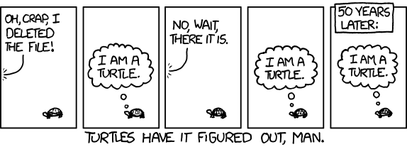
                            XKCD
                            Turtles rock. 'Nuff said. (Time for a more "fun" blog post. Too much philosophizing going on around here....)

                            Picture
                            Hawaii 2010
                            Top 10 Reasons Why I Love Turtles
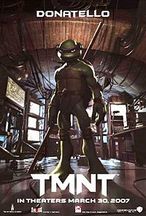
                            1. My favorite TV show as a kid was Teenage Mutant Ninja Turtles. My favorite turtle was Donatello. That is the reason why dark purple is my favorite color. And I can honestly say, that is also the reason why my favorite food is pizza.

                              Donatello was the best turtle in my humble opinion because his weapon was the most realistic: he used a freakin' stick. As I took karate lessons growing up, I wanted to learn skills from the TV that could actually be applied in real life, and I knew I wouldn't be packing nunchucks or swords anytime soon. Also, according to Wikipedia, he was the "brains of the group."

                            2. My friend Joanna loves turtles even more than I do. She has approximately twenty stuffed turtles, all with different names and personalities. She is a very smart person, so if she loves turtles, they must be great. And don't even think about making jokes about turtle soup around her.

                            3. I saw some really awesome turtles in Hawaii, both swimming around the ponds of the hotel and sunbathing on the beach. They looked peaceful and at one with nature -- something I want to be.

                            4. Shell, armor, and hiding place: Turtles have an awesome shell that protects them from predators. Their body is scaly and rough like armor, and anytime they need to hide or go into a dark spot from some R&R, they can just retract their heads into their body. How cool is that?

                            5. Sea turtles have a great sense of smell and orientation, better than even dogs. They use this to find food and to retrace their steps when laying eggs and coming back to see them hatch after going out to sea.

                            6. Turtles have an undeniably sweet nature. I think this is because they have a human face and a slow, deliberate crawl. (However, I have been notified that there are in fact angry snapping turtles that live in New Orleans, and those are the evil ones that the soup is made from.)

                            7. The tortoise is the hero of the fable, The Tortoise and the Hare. Slow and steady wins the race, baby!

                            8. There are many amazing varieties of turtles and related species: sea-lubbers, land-lubbers, tortoises, mini turtles, giant turtles/tortoises, etc. There are about 300 species of turtle. All have unique properties and cutenesses.

                            9. Turtle candies are awesome. Whoever thought of combining chocolate, almonds, and caramel is genius. If only the caramel didn't get stuck in your teeth, it would be the perfect dessert.

                            10. Turtles are the subject of a wonderful Buddhist saying about the preciousness of human life:

                              Imagine a blind turtle swimming at the bottom of an ocean the size of the universe. On the surface of the water, there floats a wooden ring, tossed around by the waves. Once every hundred years, the turtle rises to the surface. When the turtle's head rises through the wooden ring, a human is born.

                              This is an extremely special gift we have been given.
                            Picture
                            1 Comment
                             
                            Mayor Richard Riordan on Leadership and Ethics 04/28/2011
                            0 Comments
                             
                            Picture
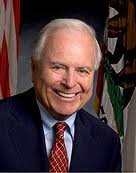
                            I'm taking a class at UCLA Anderson this quarter taught by former LA Mayor Richard Riordan. The class topic is Leadership and Ethics. It's quite a treat to be able to meet with a former mayor twice a week and hear some of his closest business and personal contacts speak about their leadership experiences.

                            Riordan told us he was born in 1930 as 1 of 10 kids. He worked as a lawyer at O'Melveny before becoming a VC in technology and later Mayor of LA. He continues to be involved politically and has focused his efforts recently on teaching, philanthropic causes, and the charter school effort.

                            In the first class, Riordan laid out for us his 4 Axioms of Leadership:
                            1. Courage
                            2. Character/giving (treat others equal)
                            3. Empowering others (just give people a job/objective, not all the details)
                            4. Relentless pursuit of goals (which includes the important exercise of setting goals)

                            It's interesting to me how closely these 4 axioms are to an exact prescription for entrepreneurship.

                            He also joked that when you're not agreeing with someone, always say, "I couldn't agree with you more!" This takes the power away from the other side, is sort of a double entendre, and allows you to continue working in what you want.

                            Riordan also explained on our first day that perceived power equals real power. When the Northridge earthquake struck, he took charge and completely blew through normal policies and regulations of how things were "supposed to" be done in order to get people rescued and infrastructure rebuilt as quickly as possible. Riordan believes in JFDI: ask for forgiveness, not permission.

                            He wishes the same philosophy would have been put in force during Katrina and Iraq. He wishes the leaders would have taken action and used the private sector to address problems more quickly.

                            Another philosophy of Riordan's is "excusez-moi, accusez-moi." This translates to mean that excusing yourself is accusing yourself. When someone accuses you of something horrendous and untrue, your best bet is to ignore it; saying you didn't do it will prompt further harassment and headlines like, "Riordan denies XYZ." This seems like good advice in dealing with blatant slander.

                            Overall, Riordan has a great sense of humor and leads a fun class, so I'm looking forward to the many guest speakers this quarter (which I will blog about also).
                            Add Comment
                             
                            Notes on Enchantment by Guy Kawasaki 04/26/2011
                            0 Comments
                             
                            Picture
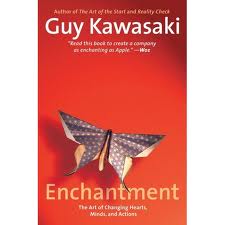
                            Below are my notes on Guy Kawasaki's Enchantment, which was a really enjoyable read. The author does a great job bringing the general theme of enchantment to life in a variety of different contexts; it's for anyone needing to enchant anyone else at any time.

                            The book starts with a great personal example of enchantment for the author: the first time he saw a Macintosh. He immediately fell in love with its two killer features: graphical UI and Mac Paint. He got a job at Apple right after that experience.

                            Enchantment is the process of delighting people. When done right, enchantment creates lasting support.

                            Ch. 1: Why Enchantment
                            • Hospitality can enchant.
                            • Converts hostility to civility
                            • When enchantment is required: big decisions, overcoming hesitation, diverging from the crowd
                            • Understand what others feel in order to enchant them.
                            • Figure out: What do they want? Is the change worth the effort? Can they change?
                            Ch. 2: How to Achieve Likeability
                            • Smile: think pleasant thoughts, smile with your eyes
                            • Dress: match the audience
                            • Handshake: eye contact, verbal greeting, hold for 2-3 seconds, have dry hands
                            • Words: simple, active voice, short phrases
                            • Attitude: accept others. People are not binary. Everyone is better than you at something. People are more similar than different. People deserve a break (problems at home, etc.).
                            • Get close physically.
                            • Don't impose your values on others.
                            • Pursue and project your passions.
                            • Find shared interests.
                            • Create win-win outcomes.
                            • Swear: show emotions, only infrequently and for harsh situations, only when audience somewhat already supports you
                            • Default to "yes" attitude.
                            Ch. 3: How to Achieve Trustworthiness
                            • Be a mensch: honest, fair, transparent.
                            • Build goodwill.
                            • Civility
                            • Fulfill promises.
                            • Help others who can't help you.
                            • Suspend blame.
                            • Don't dismiss others.
                            • Disclose your interests.
                            • Reciprocity
                            • Show up.
                            • Have a good positioning statement.
                            • Use clear terms.
                            • Use different words.
                            • Be humble.
                            • Be a hero, a man afraid to run away.
                            • Learn to endure controversy.
                            Ch. 4: How to Prepare
                            • Do something great.
                            • Deep
                            • Intelligent
                            • Complete
                            • Empowering
                            • Elegant
                            • Conduct a pre-mortem: figure out all ways a project could fail beforehand.
                            • Create easy paths for people to buy your idea.
                            • Short, simple, swallow-able
                            • Use tricolons: phrases with 3 equal parts ("simple, smart, secure").
                            • Use metaphors.
                            • Use similes.
                            • Keep it short: emails @ 5 paragraphs, PowerPoints @ 10 slides, business plans @ 20 pages, videos @ 60 seconds.
                            • Show respect.
                            • People prefer things that are easy to think about.
                            • Use rhyming, clear fonts.
                            • Have an easy name (for your business).
                            • Provide default actions.
                            • Establish goals.
                            • Create a checklist.
                            Ch. 5: How to Launch
                            • Tell a story.
                            • Have great aspirations.
                            • David vs. Goliath story
                            • Profiles in courage, perseverance
                            • Personal stories
                            • Make your setting realistic.
                            • Make a great demo.
                            • Anchor and twist: explain cause in familiar terms but with twist.
                            • Differentiate from past experiences, reinforce core beliefs, but help them do that in a better way.
                            • Create an immersive experience.
                            • Promote trial: easy, immediate, inexpensive, concrete, reversible.
                            • Prime the pump: prime your users' environment with subtle cues.
                            • Plant many seeds: PR, blogs.
                            • Embrace nobodies; anyone can be your evangelist.
                            • Give up the illusion of control.
                            • Ask people what they will do and if they intend to support you.
                            • Reduce the number of choices: paradox of choice.
                            • Increase the number of choices (sometimes this is good): mass customization, self-serve yogurt toppings.
                            • Give pertinent data from users' perspective giving meaning: iPod holds 5,000 songs vs. 4GB memory.
                            • Present the big and the small choice: use the contrast principle.
                            • Get your first follower.
                            Ch. 6: How to Overcome Resistance
                            • "To fly, we have to have resistance." --Maya Lin
                            • Early adopters are social proof.
                            • Create perception of scarcity, and your site being overwhelmed.
                            • Invitation-only
                            • Use images.
                            • Use specifics, examples, not stats.
                            • Find commonalities.
                            • Harmonize objections.
                            • Ask what-if.
                            • Find a bright spot.
                            • Incur a debt, ask for help -- brings people closer (ask to borrow a book).
                            • Enchant all influencers.
                            • Frame your competition: know it, analyze it, frame it. Keep 3 lists: what we both do, what they do and we don't, what we do and they don't.
                            • Control haptic sensations.
                            Ch. 7: How to Make Enchantment Endure
                            • Strive for internalization.
                            • Separate the believers in the team.
                            • Push implementation down.
                            • Use intrinsic rewards: exposing people to money not always best.
                            • Reciprocity
                            • Give with joy, to those who cannot help you; give early; pay it forward, often and generously, unexpectedly; ask for reciprocation.
                            • When someone says thank you to you, say, "I know you'd do the same."
                            • Make commitments public.
                            • Build an ecosystem: user groups, sites and blogs, consultants, developers, resellers, conferences about your cause.
                            • Create something worthy of an ecosystem.
                            • Give people something meaningful to do; use an open architecture.
                            • Publish about the cause.
                            • Welcome criticism.
                            • Foster discourse.
                            • Create a reward system.
                            Ch. 8: How to Use Push Technology
                            • Engage fast, respond fast.
                            • Engage many.
                            • Engage often.
                            • Use multiple media.
                            • Provide value.
                            • Give credit, leave positive comments.
                            • Give people the benefit of the doubt.
                            • Accept diversity.
                            • Don't take any crap; criticize the message, not the person.
                            • Limit promotion.
                            • Disclose your conflicts.
                            • Presentations: Customize the intro. Take pictures of audience (company, city, etc.) and put in your intro. Screenplay, not speech. Check out Duarte. Shorten. 10 slides, 20 minutes, 30 point font. Practice often.
                            • Email: Use business domain email address. Get an intro. Keep it to 6 sentences. Minimize attachments. Ask for something concrete.
                            • Twitter: Informational links. Promote your content. Smart, brief. Make it personal.
                            Ch. 9: How to Use Pull Technology
                            • Websites and blogs: Refresh often. Skip Flash. Make it fast. Graphics and videos. FAQ. About page. Search. Optimize for devices.
                            • Facebook: Add a landing tab to fan page. Use friend lists.
                            • LinkedIn: Optimize your profile. Groups. Answers. Search by company. Integrate into a new job.
                            • YouTube: Provide intrinsic value. Short videos.
                            Ch. 10: How to Enchant Your Employees
                            • MAP: Mastery, Autonomy, Purpose.
                            • Address your shortcomings first.
                            • Rocking the boat is ok.
                            • Express appreciation and wanting of employees.
                            • Provide free stuff.
                            Ch. 11: How to Enchant Your Boss
                            • Make your boss look good.
                            • Do what your boss asks you first, not what you think is the priority.
                            • Under-promise and over-deliver.
                            • Prototype your work.
                            • Deliver bad news early.
                            Ch. 12: How to Resist Enchantment
                            • Avoid tempting situations.
                            • Delay decisions.
                            • Look far into the future.
                            • Watch out for bad data.
                            • Don't just rely on anecdotes.
                            The book ends with a nice message: the truest enchantment is love.

                            Add Comment
                             
                            Notes on Janice Fraser talk at LeanLA 04/24/2011
                            2 Comments
                             
                            Picture
                            It's been a while since my last post. Sorry, guys. Been super busy with "life." :-)

                            I attended a talk a while ago by Janice Fraser called, "Kill Your Darlings." It was at a LeanLA Meetup. The full slides are at the bottom of this post, and below are my takeaways from the presentation. Janice was really fun and showed she has a lot of great experience helping start-ups really focus on getting UX right from a lean angle.

                            Janice is the founder of Adaptive Path, a product design firm. She coined the terms "blog" and "AJAX" and started the field of lean UI design.

                            Her main claim is that a start-up is like a garden, not a cute bunny. You have to remove weeds and be ready to replant it, not nurture it like a pet.

                            She mentioned the main heroes of the lean movement: Eric Ries and Steve Blank (and my friend Patrick, the organizer of the event, is quite its hero too). Lean encompasses customer development (make products people actually want) with agile development (incremental releases).

                            She went through a great example of split testing of home page conversions and how a start-up learned some non-intuitive lessons of how to significantly boost conversions with small changes. Even when you feel strongly about something, it still pays to do experiments.

                            Lean also refers to the Toyota Production System, which emphasizes reducing inventory, risk, and waste. In this context, waste is time spent between making a decision and knowing if it works. In order to reduce waste, she recommends following three types of cycles:
                            • Build, Measure, Learn
                            • Think, Make, Check
                            • Prove, Improve. Prove what you know by testing. Improve on your software with what you learned.
                            Lean means getting comfortable throwing things away (killing your darlings).

                            She also went through certain main facets of lean UX design:
                            • Cross functional teams. No one "owner" of a project who has final responsibility. Joint responsibility.
                            • Principle-driven process
                            • Rituals, wireframe checks. Ask someone in a stand-up meeting: 1. Is this an accurate reflection of the system? 2. What here is hard? 3. What alternatives are there? 4. Is it worth the effort?
                            • Wireframe using Omnigraffle, Balsamiq, etc.
                            • Organize every iteration around a user quote.
                            • Flair and focus, generative and decisive, brainstorm and decide.
                            • Develop deep sense of empathy for the user. Have them tell you a story.
                            Janice also spoke about some quick and dirty experiments you can run with usertesting.com for split tests, analytics, and to follow actual people through your site.

                            Finally, she referenced several texts she recommends:
                            • User Centered Agile Methods by Hugh Beyer
                            • Mental Models by Indi Young
                            • Observing the User Experience by Mike Kuniavsky
                            Lean UX for Startup Teams (Kill Yr Darlings)
                            View more presentations from Janice Fraser
                            2 Comments
                             
                            Notes on The Millionaire Next Door 04/02/2011
                            3 Comments
                             
                            Picture
                            At the recommendation of several people, I read The Millionaire Next Door, a book debunking a lot of myths around who millionaires are and how they live their lives.

                            I found the book interesting, and a lot of the data the authors gathered definitely surprised me (they surveyed over 11,000 millionaires). I thought, however, the the book was too focused on data and statistics; listening to the audio version made it painfully clear how many numbers and statistics were in the text.

                            I also was disappointed that the authors didn't spend much (if any) time in their text going into the question of the purpose of wealth accumulation. A lot of focus was on how people accumulate wealth and how not to get carried away consuming, but there was little or no discussion of the happiness that results from consumption and how short-term happiness can or should be traded off against long-term financial security and wealth accumulation. I understand this is something very personal that everyone decides, but it would've been nice for the authors to talk about how such a decision can be made.

                            Finally, it would be nice if the book were updated for any changes that might have happened in recent years in buying habits, incomes, etc.

                            Below are some of my main takeaways/notes on the book.

                            • Wealth is not the same as income.
                            • What's important is how much you accumulate, not how much you spend; many people who earn less but are more careful with spending become much wealthier than those with high salaries and high-consumption lifestyles.
                            • Building wealth takes hard work, planning, and self-discipline.
                            • The most affluent-looking neighborhood actually often doesn't contain the wealthiest households, just the ones with the most conspicuous spending.
                            • Most millionaires are the first generation in their family to become wealthy.
                            The 7 Common Factors of a Millionaire
                            • Lives below means
                            • Allocates money and time efficiently
                            • Considers financial independence more important than status
                            • No parental help
                            • Children self-sufficient too
                            • Proficient in targeting market opportunities
                            • Chose right occupation

                            Research Findings
                            • Little spending on clothes
                            • Most millionaires don't drive foreign luxury cars and rarely lease.
                            • Looks are often deceiving. Texas saying: "Big hat, no cattle" (people who spend more on clothes but actually have little business progress)
                            • Own home, American car
                            • Save 60% of income
                            • 2/3 are self-employed
                            • Spend heavily on children's education
                            • Married to same person whole life
                            • Invest 20% of income
                            • 95% have between $1-10 million
                            • Wealth defined by net worth
                            • What your net worth should be: your age times your pretax income divide by 10
                            • Wealth affected by consumption habits; calculate the years you can live at your lifestyle without working
                            • 19% receive some wealth from parents
                            • Country of origin unimportant
                            • Immigrants: self-employed, most important factor to building wealth
                            • Russian ancestry group highest accumulators of wealth. Russians have 5% of all wealth in US -- due to an entrepreneurial spirit that goes from generation to generation.
                            • Scottish also account for large portion of millionaires compared to population %. Scottish are very thrifty, compensating for lower income. Scottish offspring are financially independent.
                            • Entrepreneurs teach their children to do the same and have a better life through education.
                            Foundation for Building Wealth
                            • Frugality
                            • No expensive products 
                            • Never spend more than $399 for most expensive suit (example)
                            • No need to impress anyone
                            • Can't show employees that you're making too much money
                            • Never spend over $140 for shoes (example)
                            • Press sensationalizes those who spend crazy amounts (like celebrities), but these people very often go broke.
                            • Half of the millionaires surveyed never spent over $300 for a watch.
                            • Most people pile on debt to spend now.
                            • Jobs that lead to wealth creation are often not sexy.
                            • Parents of millionaires were frugal and taught frugality to their children. Spouse is often even more frugal than the main earner.
                            • Intense focus on budgeting and planning all expenses
                            • Invest 15% of income before spending
                            • 8 hours per month spent planning investments (but not active trading); buy and hold -- more time on fewer deals to study
                            • Plan and manage investments in areas of expertise
                            • Teach kids the importance of investing
                            • Tabulate all home expenditures per month and budget for future
                            • Defined quantitative goals per day, week, and year
                            • Derive happiness from security and family.
                            • No display of conspicuous artifacts
                            • Minimize income taxes by minimizing realized income
                            • People who optimize this the most pay 2% of wealth in taxes per year.
                            • If you're not yet wealthy, don't purchase a home requiring mortgage payments of twice your annual realized income.
                            • Allocate time, energy, and money efficiently
                            • A lot of time spent planning investments and meeting with quality advisors
                            • Begin investing early in life
                            Selecting Advisors
                            • Background checks
                            • References
                            • Ask for college transcript
                            • Ask for evidence of past work
                            • Use personal referrals
                            Wealth better than displaying social status
                            • Cars: average maximum paid was $20K; never current year model; 1/3 had used car; very few lease; prefer American models 
                            • Most shopping at Sears
                            • Never buy retail-priced suit
                            Economic Outpatient Care
                            • This refers to gifts to adult children, which happens a very large % of the time.
                            • Becomes a dependency
                            • Teaching frugality and independence better than giving cash gifts
                            • Recipients of gifts under-accumulate wealth.
                            • Weakest sibling get most of inheritance (need-based) but goes less far.
                            • Select outsiders among executors of estate. Distribute money once children mature to a certain age and career standing.
                            Raising Kids
                            • Never tell kids their parents are wealthy.
                            • Teach discipline and frugality. Teach by example.
                            • Assure kids won't know you're affluent until they are mature.
                            • Distribute inheritance once kids mature, 40 years old, and have career.
                            • Never give cash gifts.
                            • Minimize discussions of inheritance and gifts.
                            • No gifts from negotiation.
                            • Stay out of kids' family matters. Ask permission to give advice and gifts.
                            • Never boast of your past achievements or what you had at the kids' age.
                            • Always remember that children are individuals and will be unequal.
                            • Emphasize kids' achievements, no matter how small or different.
                            Pick a Niche, Supply the Affluent
                            • Estate, tax, and immigration attorneys
                            • Psychologists
                            • Chiropractors
                            • People providing stress relief
                            • Appraisers, auctioneers
                            • Real estate management professionals
                            • Education professionals
                            • Private school
                            • Travel
                            • The character of the business owner is more important than the type of business.
                            • Non-sexy businesses are most stable and less competitive and produce greater wealth.
                            3 Comments
                             

                              About Max Mednik

                              Max is an avid entrepreneur and student of life. He is a graduate of Stanford and founder of Ridacto and AMA Capital. He is a member of the business school class of 2012 at UCLA Anderson. He lives in Los Angeles with his family and spends his free time enjoying his many hobbies and interests.

                              Picture

                              Archives

                              January 2012
                              December 2011
                              November 2011
                              October 2011
                              September 2011
                              August 2011
                              July 2011
                              June 2011
                              May 2011
                              April 2011
                              March 2011
                              February 2011
                              January 2011
                              December 2010
                              November 2010
                              October 2010
                              September 2010
                              August 2010
                              July 2010
                              June 2010
                              May 2010
                              April 2010
                              March 2010
                              February 2010

                              Categories

                              All
                              Cacti
                              Culture
                              Design
                              Djing
                              Dogs
                              Education
                              Entertainment
                              Entrepreneurship
                              Family
                              Finance
                              Food
                              Happiness
                              Incentives
                              Investment Banking
                              Judaism
                              Law
                              Lighting
                              Magic
                              Marketing
                              Medicine
                              Networking
                              Philosophy
                              Professionalism
                              Psychology
                              Reading
                              Real Estate
                              Religion
                              Romance
                              Sales
                              Shangri La
                              Social Entrepreneurship
                              Social Media
                              Sports
                              Teams
                              Technology
                              Travel
                              Turtles
                              Ucla
                              Venture Capital
                              Web Services
                              Weddings
                              Zen

                              Subscribe

                              RSS Feed

                              Connect

                              Follow Me on Twitter

                              View my profile on LinkedIn
                              Picture
                              Connect on Facebook
                               
                              View teknikdj's profile on slideshare
                               
                              Subscribe to me on YouTube


                              Shazam Tags