|
An interesting quote from the second Zen class I went to yesterday (the third and last class in the series will be next week):
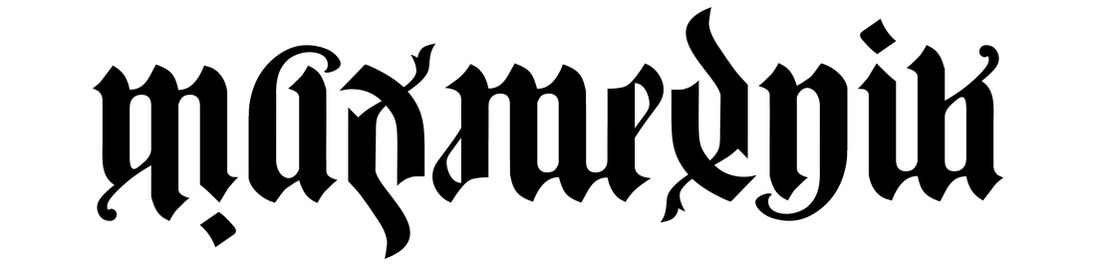
A frog can just "frog." A bird can just "bird." But a human cannot just "human." The key is that animals have very little that gets in the way of their just being themselves. They can sit, eat, sleep, and most importantly focus on exactly what they want and what they feel at every instant. In this way, they are somehow able to be at peace with themselves and in touch with the world around them and with other beings much more powerfully. But people are different. It is extremely difficult for us to just sit and think of nothing. Or just eat and enjoy our food. The main "practice" in Zen is nothing but sitting -- detaching from the world and one's thoughts and just being. Just humaning. Why is this so hard for us? Why do we have so little control of our thoughts? What makes us different from animals? I think it's much more complicated than just the fact that we are self-aware and have "intellect." I think our ability to just human changes as we age and changes based on the situation we're in, and I think it is something that we can even learn to do better through practice. This concept of just being and why it is difficult for us has kept my attention since the class I attended. I'm curious also about how I and other people are able to see glimmers of bright spots when we are just being or doing one specific thing very effectively -- when we're "in the zone" or able to be creative or concentrated. I'm curious about what allows us to be that way from to time and how we can do that more often. Also, what role does technology play in all this? In some obvious ways, technology really distracts and makes us the least human I can imagine, especially when it disconnects us from establishing heartfelt and direct communications with other people and brings us further rather than closer to others. However, when used in other ways, I think (social) technology can also allow us to be more human than was ever possible before, and I'm curious how we can make that happen. This blog post isn't really meant to answer any questions; it is meant to put out there some of the questions that have gotten me thinking and welcome others' feedback and input.
0 Comments
This is the second idea that I've had for a while and which has always kept me wondering.
If there was some reason why all of humanity went away except for a small group of people, how could/would they recreate the world? How would they reproduce all of our inventions and achievements? Would they do things differently? What skills would be required, and what people would you want there with you if it was you and others? What if it was just you alone? I come to think of these questions when I appreciate the simplest conveniences in life. For example, the house or building you're sitting in right now. There are so many subtle yet complicated innovations and improvements that have allowed us to have such comfortable lives in modern buildings that I have very little knowledge about. Or our electronics, like computers, iPods, and telephones. I understand the most basic concepts behind how these devices work and if I had a long time by myself with a lot of basic tools and resources, I could probably replicate them eventually, but they would be much, much more primitive. If I were responsible for rebuilding civilization, what knowledge would I want to have? This is to some extent what motivates me to learn in life: to become as capable as I can be if I ever have to rebuild something myself, less in a disaster-preparedness sort of way and more in a community-responsibility sort of way. Would I want to study certain specialties like mechanical and electrical engineering much more than I did in college? Or would I want to go for breadth instead of depth so that I could build at least the most basic versions of each important part of civilization. And the above is just about our "stuff." What about us? How would I/we structure our lives and our environment socially and politically? What systems would we keep from what we have now and what systems would we try anew? What historical mistakes would we avoid, and which would we commit again because of our human nature? I hope that this sort of situation never happens literally, but the same sort of questions apply in a different way to our lives in our current society. Even though we are not rebuilding old stuff from scratch, we are building new stuff all the time, and we have our current government and political systems. We don't have the power to change everything at once or start from scratch in a totally new direction, but we do at least each have the responsibility to learn and advance the knowledge necessary to be good citizens and members of society. If each person believed he or she was responsible for our entire world, would we be in a better place than we are now? I think so. Today I've decided to blog about two ideas that I have had throughout my life. I probably thought of these concepts when I was about 15 and kept wondering about them since.
Both ideas/concepts center on somewhat unanswerable questions and which relate to much of the human experience. The first one is about simultaneity. How many people at this exact instant in time are doing exactly what you're doing? Or, How many people at this exact instant in time around the world are doing ____ (fill in the blank with whatever you want)? I'm sure this is a common thought that most people think about at one point or another. I've only seen in it in pop culture in the movie Amélie, in the scene where multiple people around the world are shown to be doing the same "activity." I often think about this when I'm alone or when I'm doing something that is usually very mundane, like taking out the trash. How many people are drudging through this with me? However, the thought also comes to me when I'm doing something special, like blowing out birthday candles. It is often in such special, fleeting moments that I like to realize that with the vastness of humanity (and the similarity between people) that someone else must be doing exactly what I'm doing. This realization makes me feel less alone and somehow connected to others that I can't see or know. Maybe someone can do an analysis of how many Twitter posts happen each instant that are about people doing the same activity. I know there are many trending Twitter topics that are popular to write and think about, and I'm less interested in how many people are thinking about the same thing than how many people are doing the same thing. Maybe someone else out there is blogging about simultaneity as we speak. Hopefully they subscribe to my feed. |
Archives
February 2023
Categories
All
Subscribe |
 RSS Feed